A simple, honest comparison to help you pick the right machine for your plant.
For most factories that run daily, yes. A servo motor injection moulding machine uses less power, runs quieter and repeats shots more steadily than a standard hydraulic machine. But it costs more upfront. If your machine runs only a few hours a day or your budget is very tight, a standard hydraulic machine can still be the smarter choice.
Key Takeaways
- Servo machines save power because the motor works only when the machine needs it.
- Savings are higher on longer cycles and on machines that run many hours a day.
- Servo machines are quieter and run cooler.
- Standard hydraulic machines cost less to buy and are easy to repair.
- The right pick depends on running hours, product type and budget.
Introduction
This is one of the most common questions buyers ask us. Both machine types make good plastic parts. The real difference is in how they use power and how steady they are, shot after shot.
A servo motor injection moulding machine is not always the winner, so this blog compares both in plain words. You will see where servo wins, where hydraulic is still fine, and how to decide for your own factory.
Table of Contents
- How Each Machine Works
- Servo vs Hydraulic: Side by Side
- What Do the Energy Numbers Say?
- Does Servo Make Better Parts?
- Price and Payback
- When Servo Is the Better Choice
- When a Hydraulic Machine Is Still Enough
- Care Tips for Both Machines
- Safety and Compliance Note
- FAQs
- Conclusion
How Each Machine Works?
A standard hydraulic machine has a motor that drives an oil pump. The motor keeps running at full speed the whole time, even when the machine only needs a little oil. Valves then control how much oil reaches the cylinders. The extra power is simply lost as heat.
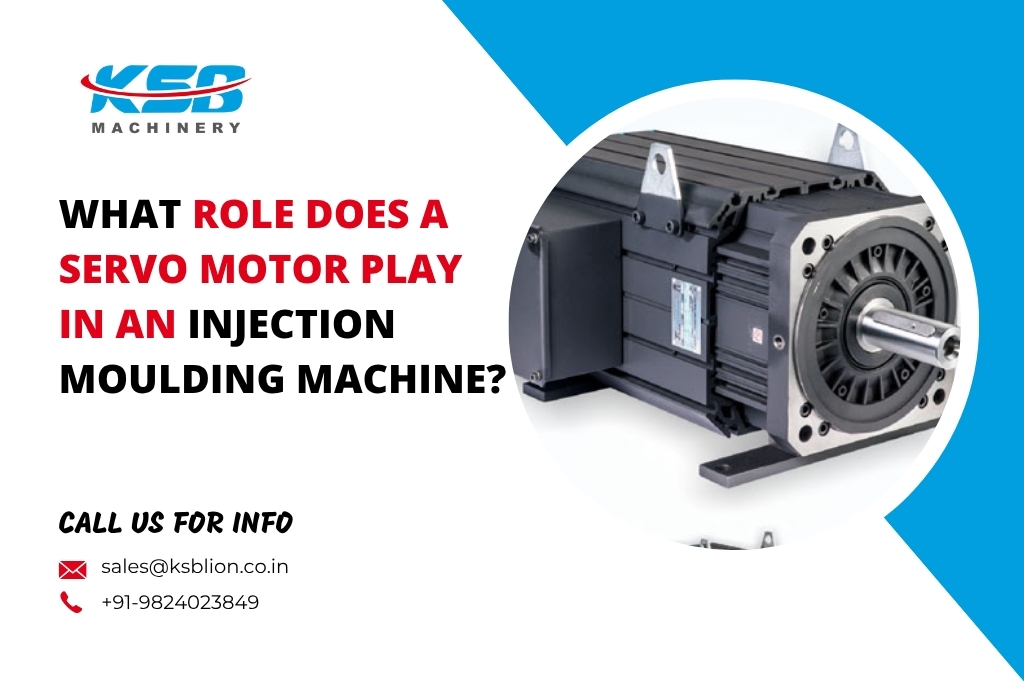
A servo machine adds a servo motor and a drive to this system. The motor changes its speed to match what the machine needs at each step. When the machine waits, such as during cooling, the motor slows right down. To understand the motor itself, read our blog on Servo Motor Role in Injection Moulding Machine.
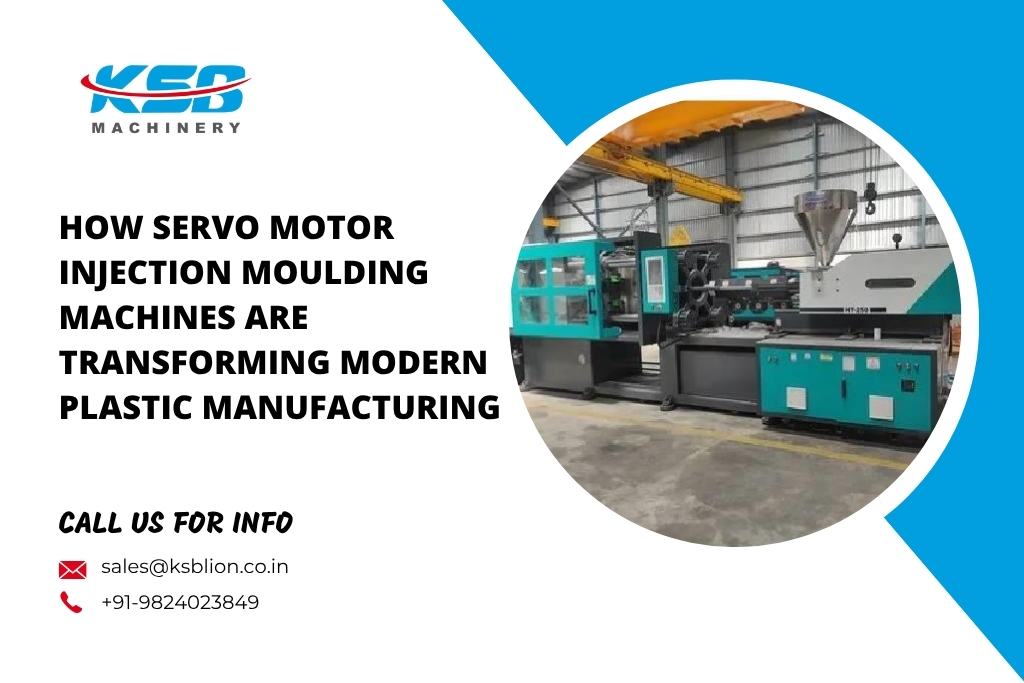
Most servo machines in Indian factories are servo-driven hydraulic machines, which still use oil. All-electric machines use servo motors for every movement and have no oil pump at all.
Servo vs Hydraulic: Side by Side
| Point | Servo Motor Machine | Standard Hydraulic Machine |
| Power use | Lower, motor follows demand | Higher, pump runs all the time |
| Noise | Quieter | Constant pump noise |
| Shot repeatability | Very steady | Good, but can drift as oil warms |
| Oil temperature | Usually runs cooler | Heats up faster |
| Upfront price | Higher | Lower |
| Repairs | Needs trained drive service | Simple, widely known |
| Best for | Daily, long-hour production | Light use, tight budget |
What Do the Energy Numbers Say?
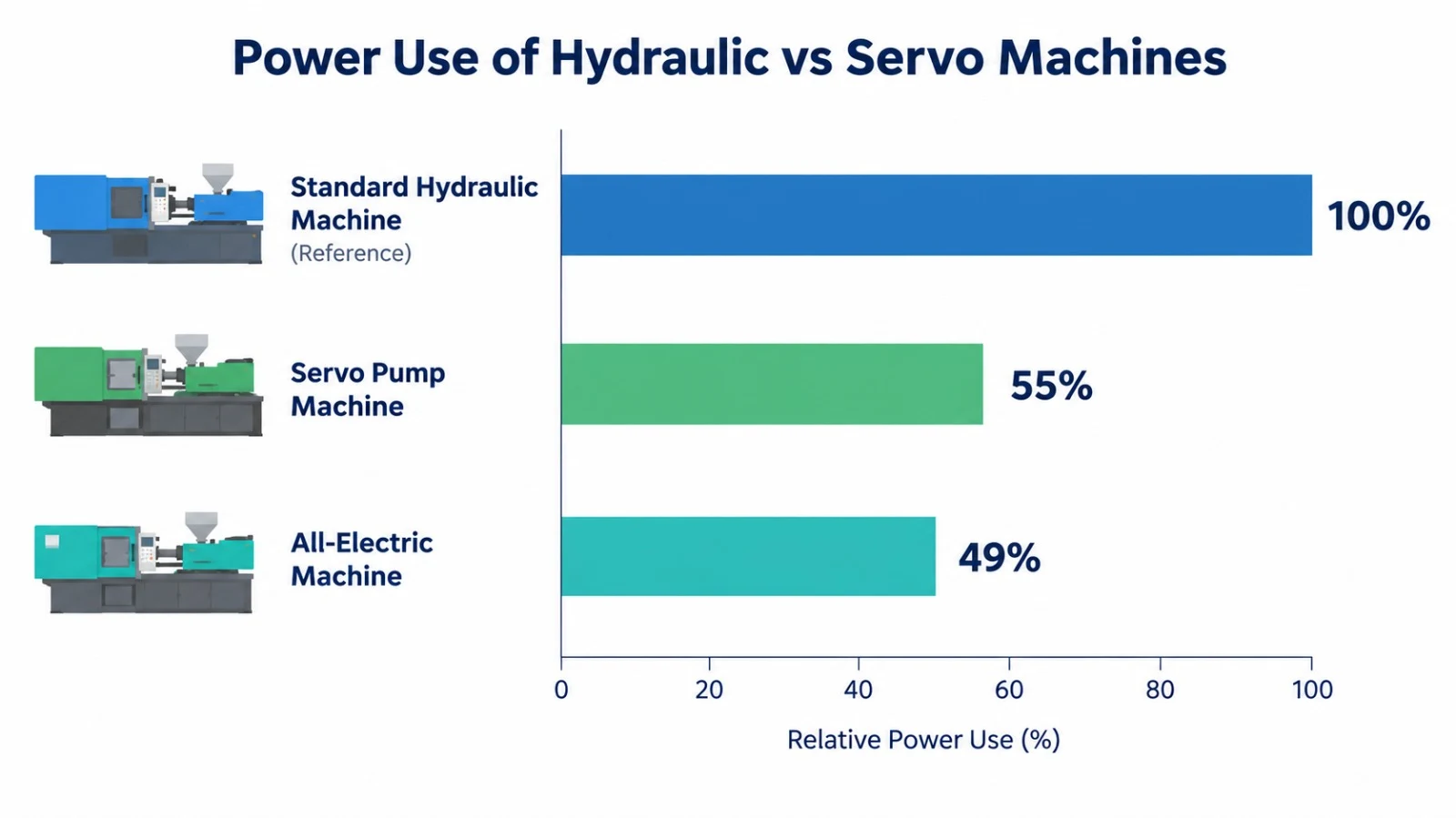
Different studies give different numbers, because savings depend on the machine size, product and cycle time. The table below shows what three sources report.
| Source | What It Reports |
| Plastics Technology (large machines) | Servo-driven pumps saved up to 35% against conventional drives |
| Baumüller (drive maker) | Servo pumps cut energy by more than 30%, and up to 50% on longer cycles |
| Find Out About Plastics | A servo pump machine used about 54 to 55% of the energy of a constant pump machine |
Our own servo page mentions up to 50% lower energy use. Treat that as the top end. A fair planning figure for most plants is somewhere between 30 and 50%, and it grows when cycles are long. For a closer look, see our blog on Servo Injection Moulding Machines Energy Saving.
Here is a simple example. Say a machine on a standard pump uses 10 units of power an hour. A 40% saving is 4 units an hour. Over 8 hours a day and 26 days a month, that is 832 units. At 8 rupees a unit, you save about 6,650 rupees a month. This is only an example, so put in your own tariff and running hours.
Does Servo Make Better Parts?
Often, yes. In a standard hydraulic machine, the oil warms up as the day goes on. Warm oil is thinner, so pressure and speed can drift a little. This can change part weight from morning to evening.
A servo machine controls the pump speed directly, so it follows the set pressure and speed more closely. The result is steadier shots and fewer rejected parts. This matters most for parts with tight weight or size limits, such as closures and small technical parts. A good mould and good material still matter more than the machine, so do not expect servo to fix a weak process.
Price and Payback
A servo machine costs more to buy, so the real question is how fast the savings repay the extra price. Use this simple sum: extra price divided by monthly power saving equals months to payback.
Using the earlier example, suppose the servo model costs 3 lakh rupees more and saves about 6,650 rupees a month at 8 hours a day. Payback is about 45 months, or nearly four years. If the same machine runs 16 hours a day, the savings doubles and payback falls to about 23 months. This is why running hours matter so much. Fewer rejected parts and lower oil heating add to the saving, but count only the power saving to stay safe.
When Servo Is the Better Choice?
Choose a servo machine when:
- The machine runs 8 hours a day or more
- Your cycle time is long, such as thick parts with long cooling
- You make parts where weight and size must stay the same every shot
- Your power bill is high or your factory has noise limits
- You plan to keep the machine for many years
If you are also weighing all-electric options, our blog on Electric vs Hybrid Injection Moulding Machines explains that step too.
When a Hydraulic Machine Is Still Enough?
A standard hydraulic machine still has a place. It makes sense when:
- The machine runs only a few hours a day
- Your budget for the first machine is very limited
- Your parts are simple and the quality limits are wide
- You have trained mechanics who know hydraulic repairs well
For heavy-duty jobs, our Extruder Hydraulic Injection Moulding Machine is built on proven hydraulic power and suits these needs well.
| Situation | Better Pick |
| Runs 2 to 4 hours a day | Standard hydraulic |
| Runs 8 or more hours a day | Servo motor machine |
| Tight shot-to-shot accuracy needed | Servo motor machine |
| Very small starting budget | Standard hydraulic |
| High power tariff | Servo motor machine |
Care Tips for Both Machines
Whichever you buy, a few habits protect your investment.
- Check oil level, colour and temperature every day.
- Change the oil filter and oil on schedule.
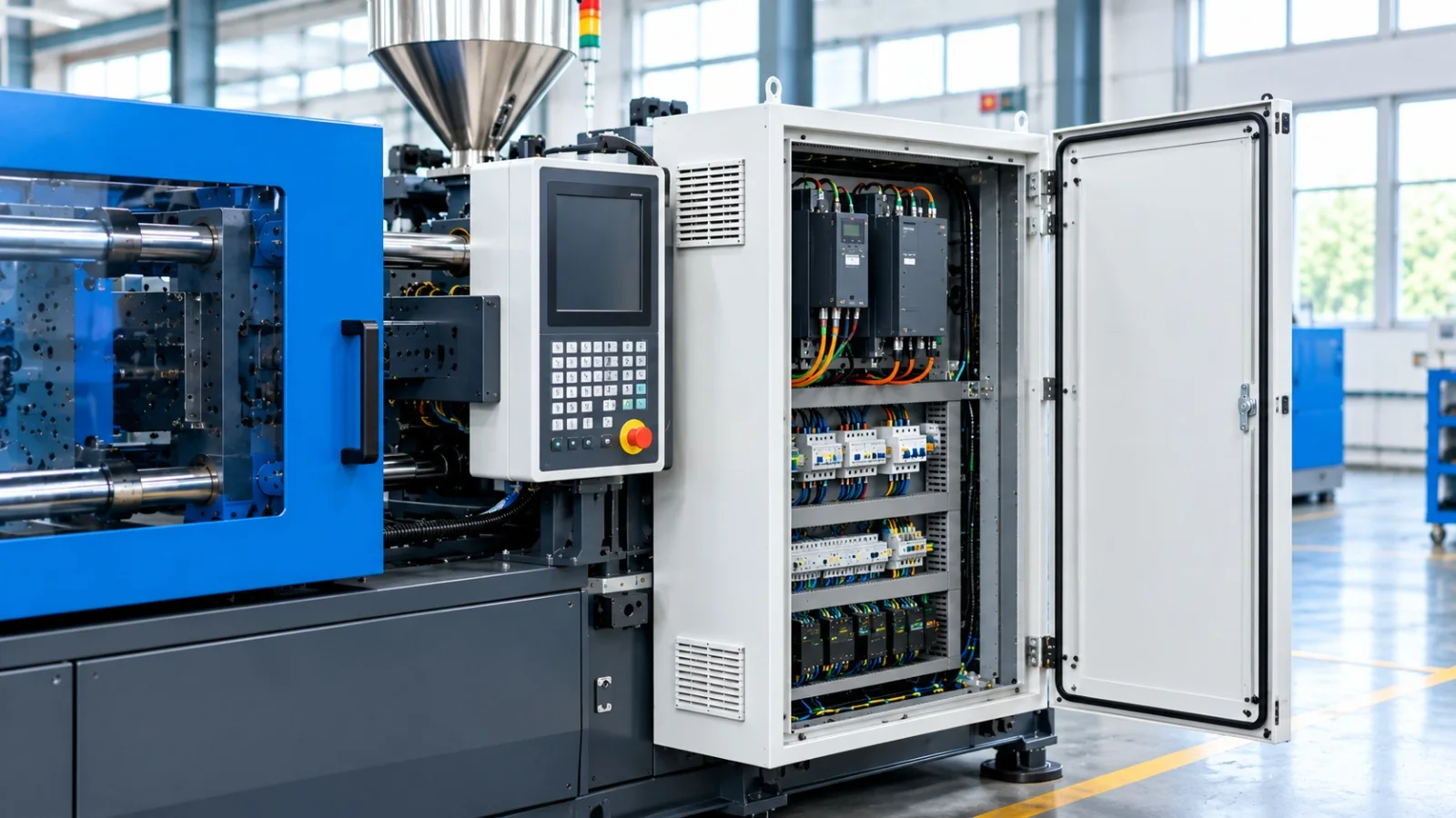
- Keep the drive cabinet clean, and check that its cooling fan works.
- Keep the machine in a place with steady voltage and clean power.
- Do not block the drive cabinet vents, because heat shortens the life of the drive.
- Record your power use each month so you can see real savings.
If you want help matching a machine to your factory, see our post on How to Choose the Right Servo Motor Injection Moulding Machine for Your Factory. You can also share your product and daily running hours with our team on the Contact Us page, and we will suggest a fair fit.
Safety and Compliance Note
Servo drives hold high voltage, even after the machine is switched off. Only trained people should open the drive cabinet. Always lock out the machine before any repair, and keep safety gates working. Machines should follow safety rules such as ISO 20430.
FAQs
Is a servo motor injection moulding machine better than a hydraulic machine?
For daily production, usually yes. It saves power, runs quieter and repeats shots more steadily. For light use, hydraulic can be enough.
How much power does a servo machine save?
Reported savings range from about 30 to 50%, depending on the machine and cycle time. Longer cycles save more.
Is a servo machine worth the higher price?
It is worth it if the machine runs many hours a day. The power savings repay the extra cost over time.
Does a servo machine still use hydraulic oil?
Most servo machines are servo-driven hydraulic machines and still use oil. All-electric machines do not.
Can I upgrade my old hydraulic machine to servo?
Some machines can be fitted with a servo drive. Ask the machine maker to check your model before you decide.
Conclusion
A servo motor machine is better for most plants that run many hours a day, because it saves power, runs quieter and keeps shots steady. A standard hydraulic machine still suits light use and tight budgets. The best way to decide is to look at your running hours, your product and your power bill. At KSB Machinery LLP, we compare these numbers with you first, so you choose the machine that pays back and not just the one that sounds modern. Do the simple monthly savings sum above with your own figures, and the answer will be clear.