
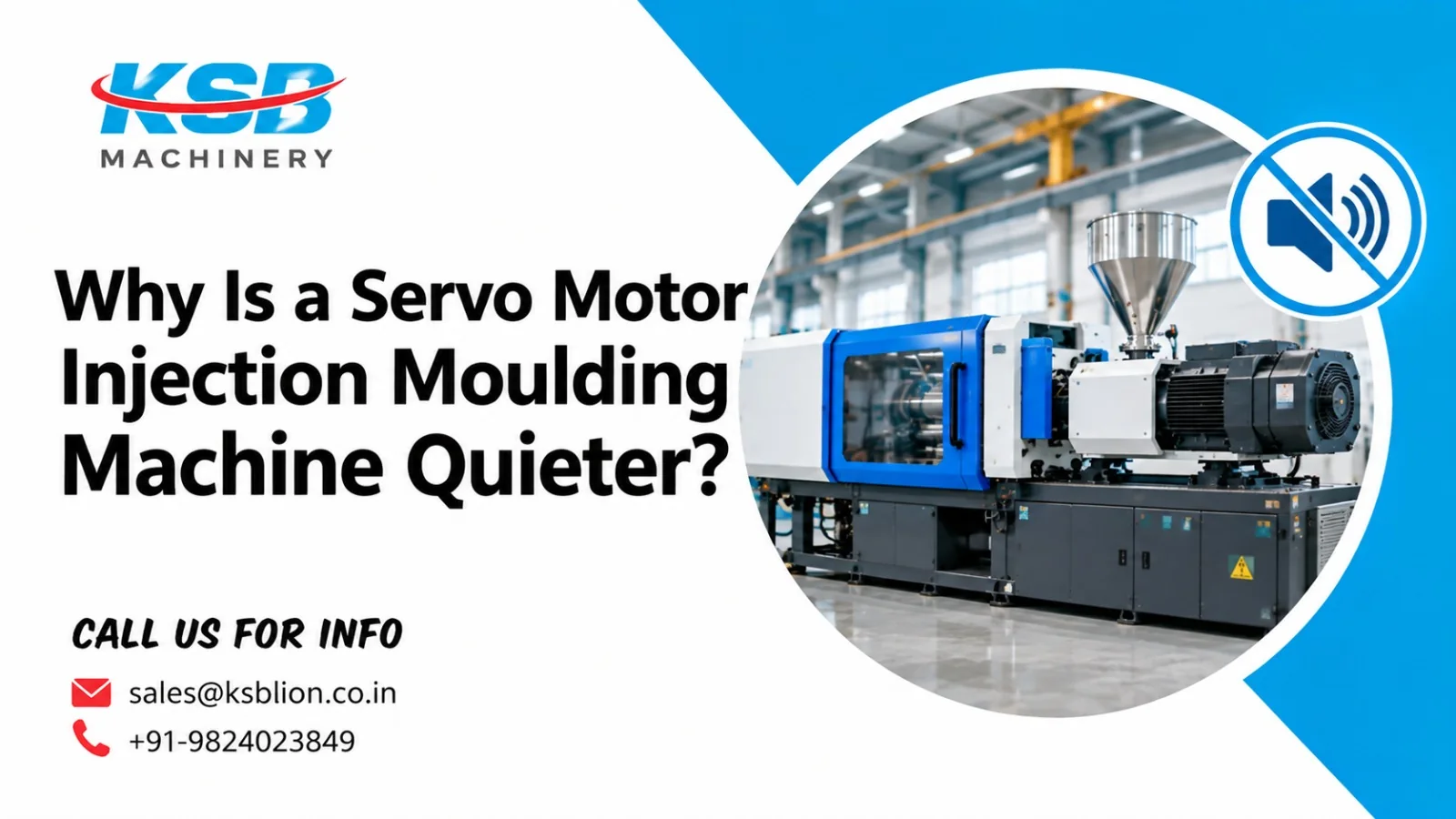
A Servo Motor Injection Moulding Machine is quieter because its motor runs only as fast as the job needs. A conventional hydraulic machine keeps its pump spinning at full speed, even during holding and cooling. Lower pump speed means less whine, less heat and less fan work, so the whole machine sounds calmer.
Key Takeaways
- The hydraulic pump is usually the biggest noise source on a conventional machine.
- A servo drive slows the pump when the machine is waiting, so noise drops during holding and cooling.
- Reported levels are around 68 dB(A) or lower for servo-driven machines, against roughly the high 70s to mid 80s dB(A) for fixed-pump machines.
- Servo does not remove every sound. Clamp impact, screw rotation and fans still make noise.
Introduction
Walk into a plant full of older hydraulic machines and the first thing you notice is the hum. Walk into one with servo machines and you can talk without raising your voice. If you are planning a new machine, or your operators are tired of noise, you may ask why servo machines are quieter. This blog explains the reasons in simple words, how much quieter they really are, and what to check before you buy.
What Is a Servo Motor Injection Moulding Machine?
A servo motor is an electric motor with a controller that adjusts its speed and torque as the process demands. A normal motor spins at one speed all day. A servo motor speeds up and slows down on command.
Many servo machines are servo-hydraulic, which means the servo motor drives the oil pump. All-electric machines go further and remove the hydraulic oil system from the main movements. You can read more about that design in our Electric Injection Moulding Machine page. KSBLION’s servo machine page lists reduced noise and smoother operation among its benefits, along with up to 50% lower energy use.
Where Does Machine Noise Come From?
An injection moulding machine is not noisy in just one place. Noise comes from several sources, and servo drives change some of them more than others.
| Noise source | Fixed-pump hydraulic machine | Servo-driven machine |
| Pump and motor | Runs at rated speed through the whole cycle | Speeds up and slows down with demand |
| Valve throttling | Extra oil flow is pushed back through valves | Less extra flow to throttle |
| Oil cooler fan | Works hard to remove heat | Less heat, so lower fan load |
| Clamp impact | Present | Mostly the same |
| Screw rotation and ejection | Present | Mostly the same |
Why a Servo Drive Is Quieter
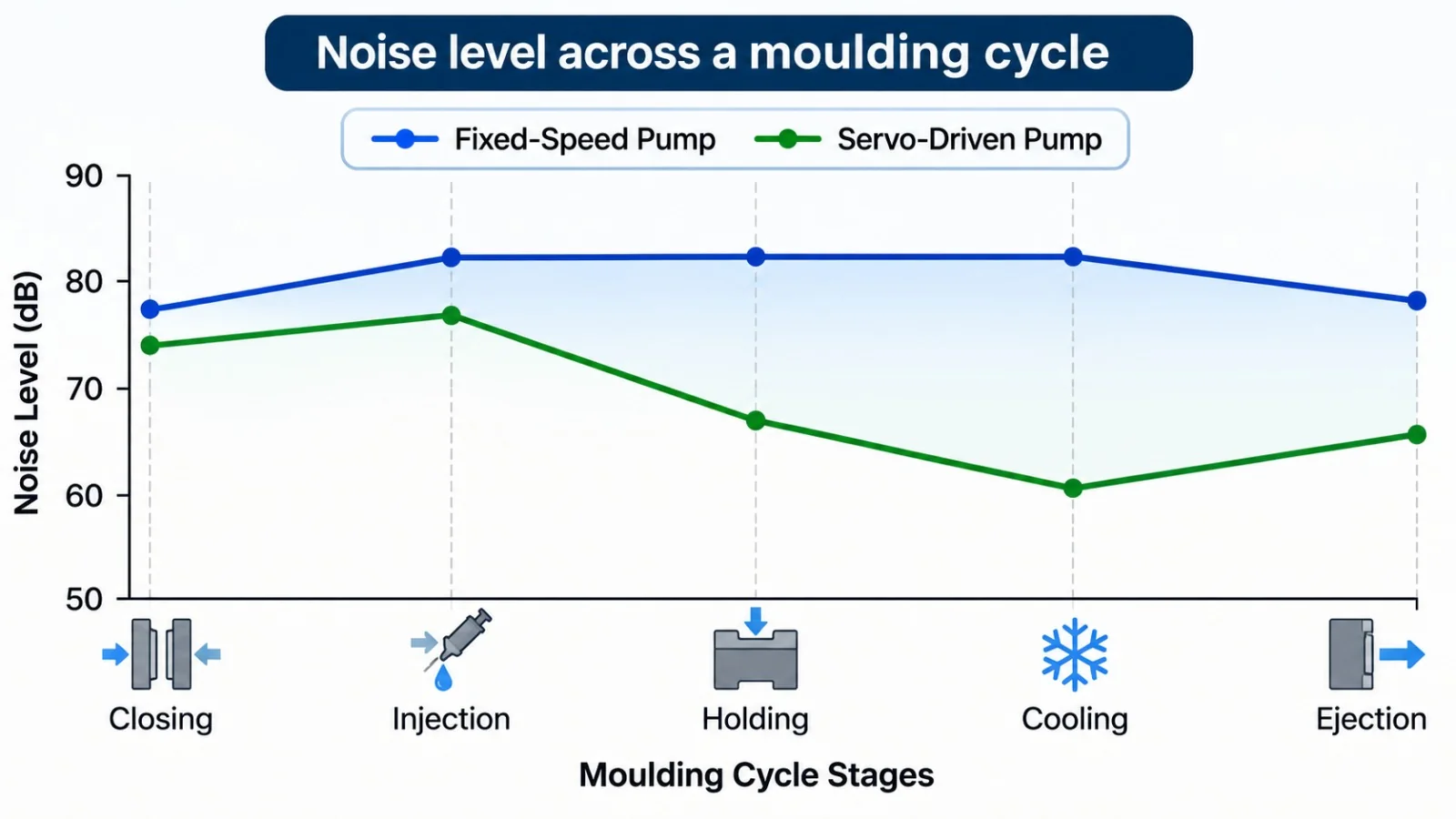
A moulding cycle has several steps: the mould closes, the plastic is injected, the pressure is held, and the part cools before ejection. Cooling is usually the longest step, and during that time the machine needs very little oil flow.
A fixed-speed pump does not know that. It keeps turning at full speed, makes full pump noise and sends the extra oil back through valves, which also makes heat. A servo-driven pump slows down or nearly stops when no oil is needed. As Plastics Technology explains, the servo motor on such a machine runs only when the hydraulics demand oil flow.
Two more effects add to the quiet. First, less wasted oil means less heat, so oil coolers and fans do not have to work as hard. Second, a servo controller changes speed and pressure smoothly, instead of switching hard between settings. Smoother changes mean fewer pressure spikes and less rattle in pipes and valves.
How Much Quieter Is It?
Numbers depend on the machine and the room, but industry sources give a clear pattern.
| Machine type | Reported noise near the machine | What to know |
| Fixed-speed pump hydraulic | Roughly the high 70s to mid 80s dB(A) | Pump noise stays constant through the cycle |
| Servo-driven pump | About 62 to 70 dB(A) | Drops further in holding and cooling |
| All-electric | Around 68 dB(A) or lower | No main hydraulic pump |
Plastics Technology puts modern servo-driven and all-electric machines at around 68 dB(A). A servo pump retrofit supplier reports that holding and cooling noise falls from about 78 to 82 dB(A) down to about 62 to 65 dB(A). Dr. Boy says its servo pump drive cuts noise by about half compared with other hydraulic machines.
Treat these as reported ranges, not guarantees. Real values change with machine size, enclosure, room and distance. As a rule of thumb, a drop of about 10 dB sounds roughly half as loud to the human ear.
Where Does a Quieter Machine Help?
A lower noise level helps in a few clear ways:
- Operators feel less tired by the end of a shift.
- Supervisors and operators can talk and hear alarms without shouting.
- It is easier to keep within workplace and boundary noise limits.
- Machines suit cleaner or quieter work areas, such as those used for medical, electronics and consumer products. KSBLION’s servo page lists automotive, medical, electronics and consumer goods among the industries served.
Plants that run many machines in one hall notice the gain most, because noise from each machine adds up.
Choosing a Servo Machine and Keeping It Quiet
What to Ask Before You Buy
| Ask the manufacturer | Why it matters |
| Noise level in dB(A) and the distance it was measured at | A number without a distance can mislead |
| Servo drive on the pump only, or on more axes | Decides how much of the cycle is quiet |
| Oil cooling design | Fans and chillers add their own noise |
| Mounts, guards and panels | Good fitting cuts rattle and vibration |
| Your product weight and cooling time | Long cooling cycles gain the most from servo |
Parts with thick walls or long cooling times benefit most, because the pump stays slow for longer. Plants with very short cycles gain less. If you want to compare drive types in full, read Is a Servo Motor Injection Moulding Machine Better Than a Hydraulic Machine? and Do Electric Injection Moulding Machines Need Hydraulic Oil?. You can also contact our team with your product and cycle details, and we will suggest a suitable machine.
Keeping the Machine Quiet
- Keep oil level and filters in good order. Low oil or air in the oil makes pumps whine.
- Clean oil cooler fans and the cooling vents on the servo drive.
- Tighten panels, guards and mounts that can rattle.
- Listen for new sounds, and check bearings and couplings when the tone changes.
FAQs
Is a servo motor injection moulding machine really quieter than a hydraulic one?
Usually yes. The main reason is that the pump slows down when the machine does not need oil flow. The actual drop depends on the machine, the room and where you measure.
How many dB quieter is a servo machine?
Reports vary. One retrofit supplier reports about a 10 to 15 dB drop in holding and cooling phases. Ask your manufacturer for measured values on the exact model.
Is an all-electric machine quieter than a servo-hydraulic machine?
Often similar or slightly quieter, because there is no main hydraulic pump. Clamp impact, screw rotation and fans still make some noise in both.
Does a quieter machine also need less maintenance?
Not automatically. Less heat and pump wear can help, and KSBLION lists minimal maintenance as a servo benefit. Oil, filters and fans still need regular checks.
What noise limits apply in an Indian factory?
Workplace noise is commonly limited to 90 dB(A) for an 8-hour shift under factory rules. Boundary noise in industrial areas is 75 dB(A) by day and 70 dB(A) at night under the Noise Pollution Rules, 2000. Check your state factory rules too.
Can I make an old hydraulic machine quieter?
A servo pump retrofit is reported to cut holding and cooling noise, but results vary. Good maintenance, tight guards and proper mounts also help. Ask a specialist before you decide.
Conclusion
A servo motor injection moulding machine is quieter because it stops doing work that the process does not need. The pump slows down during holding and cooling, less heat is made, and speed changes are smooth. It will not remove every sound, but it brings the loudest source down by a clear margin. At KSBLION, we have built injection moulding machines in Ahmedabad since 1998, and our servo motor machines are made for plants that want lower noise along with energy savings and steady quality. If a calmer shop floor matters to you, ask for measured noise values, check the drive design, and match the machine to your cycle time before you decide.