Small, precise and clean parts run best on an electric machine. Here is how to check if yours qualifies.
Small and mid-size parts that need tight tolerance, a clean finish and the same quality every shot suit an electric injection moulding machine best. Think medical parts, connectors, caps, thin-wall containers and small precision gears. Very large, heavy parts often fit a hydraulic machine better.
Key Takeaways
- Electric machines shine on small, detailed parts where size must stay the same shot after shot.
- No hydraulic oil means a cleaner process, which helps medical and packaging work.
- Fast, smooth movements help thin-wall parts and short cycle times.
- Heavy, large parts need a closer look at clamping force and budget.
- Match the machine to your part weight, material and tolerance before you buy.
Introduction
Not every plastic part needs the same kind of machine. Some parts are tiny and fussy. Others are big and rough. An electric injection moulding machine is built for the first kind. Many buyers ask the same thing before they invest: will my product run well on it? In this blog, we look at the parts it makes well, the parts it does not, and how to decide for your own factory. We keep the language simple, so you can use it as a quick check before you talk to any machine maker.
What Is an Electric Injection Moulding Machine?
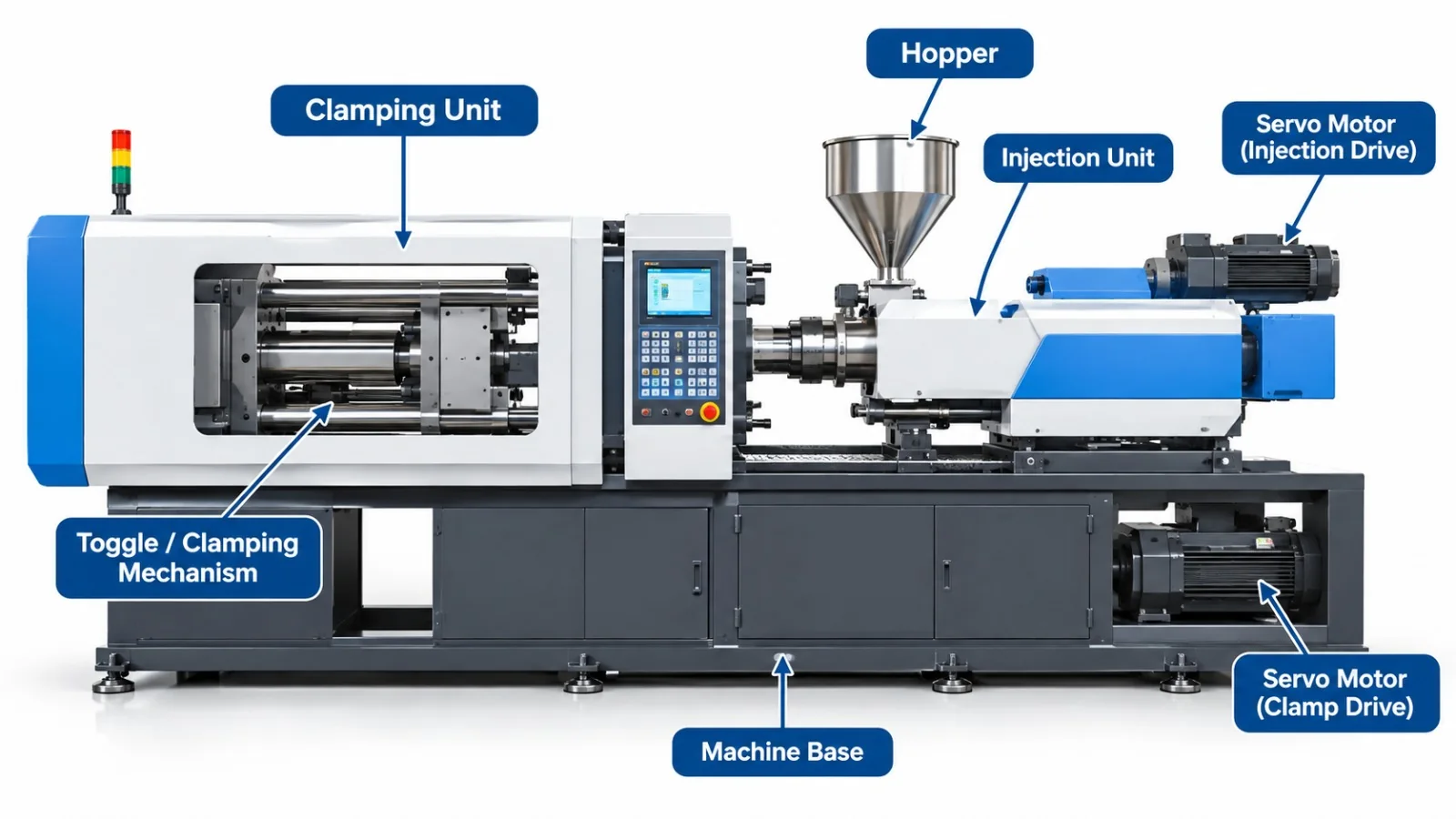
It is a moulding machine that runs on servo motors instead of a hydraulic pump and oil. Each main movement has its own motor. That means the machine does only what is needed, when it is needed. The result is less power use, less noise and very steady shots.
How It Makes a Part
The steps look the same as any injection moulding, but the drives are different.
- Plastic granules melt in a heated barrel.
- A servo motor pushes the screw forward and fills the mould with melt.
- The clamping unit holds the mould shut with even force while the part cools.
- An electric ejector pushes the finished part out, and the next cycle begins.
Because motors can move at the same time, the machine can save a few seconds in every cycle. Over a full day, those seconds add up. Each motor also reacts quickly to the controller, so speed and pressure follow the set values closely. This is the reason small, detailed parts come out the same from the first shot to the last.
Plastic Parts That Suit It Best
Electric machines are known for repeatable results. That is why they are common in work where a tiny size change can ruin a part. Makers use them for items as fine as camera lens parts and also for tougher items like battery cases.
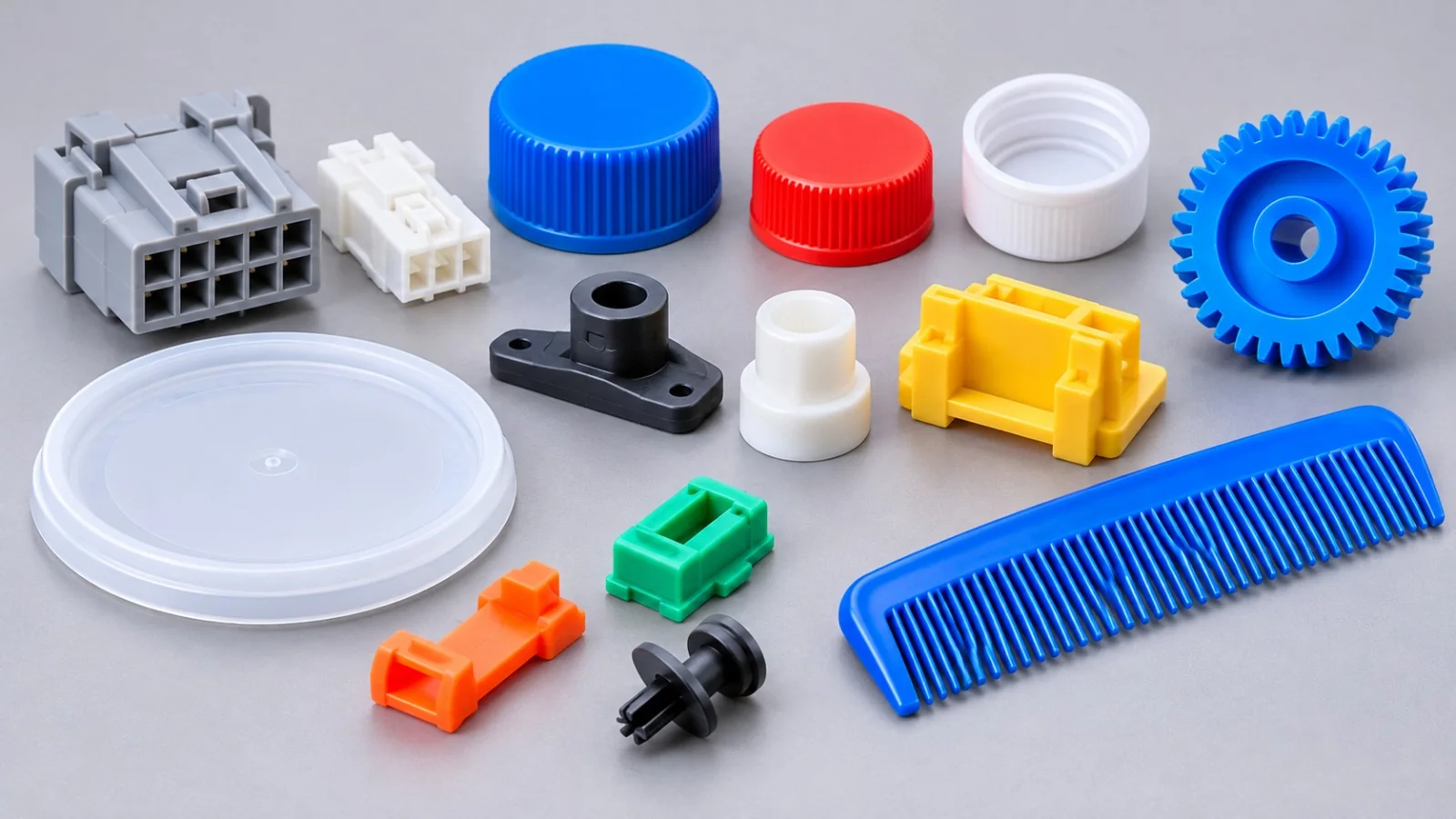
You will usually see these parts on an electric machine:
- Small medical parts, where clean production matters.
- Connectors, switch bodies and plug housings in electronics.
- Caps, lids and thin-wall cups in packaging.
- Small gears, clips and sensor housings in automotive work.
- Everyday items like combs, spoons and small valves in consumer goods.
| Part Type | Why an Electric Machine Fits | Examples |
| Medical | Oil-free, clean, very repeatable | Small disposable parts, vial caps |
| Electronics | Tight size control on small shapes | Connectors, plug housings, casings |
| Packaging | Fast cycles on thin walls | Lids, cups, caps |
| Automotive (small) | Same quality across long runs | Clips, sensor housings, small gears |
| Consumer goods | Smooth finish, low scrap | Combs, spoons, caps |
Here is why each group fits.
Medical parts. Clean making is the main need here. With no oil in the machine, there is less worry about oil mist or drips near the mould area. Makers also like how steady the shots are, because medical parts must match the same size every time.
Electronics parts. Connectors and plug housings have small pins, thin ribs and tiny gaps. A small change in fill can leave short shots or flash. Servo control keeps the fill even, so these parts come out sharp.
Packaging parts. Caps, lids and thin cups are made in huge numbers, so even a fraction of a second saved per cycle matters. Some electric machines run thin-wall work with cycles under two seconds.
Small auto parts. Clips and sensor housings run for months on the same mould. A machine that holds its settings means fewer rejects and fewer stops to adjust.
Parts That May Need a Different Machine
An electric machine is not the answer to everything. Very large and heavy parts need a lot of clamping force, and that is where hydraulic machines are often picked. Rough parts with loose tolerance also do not need the extra precision, so you may be paying for something you will not use. Parts with metal inserts or an odd layout may also suit a Vertical Injection Moulding Machine better, as gravity helps hold the insert in place. Budget matters too, as an electric machine usually costs more at the start. If you want a lower-cost middle path, a Servo Motor Injection Moulding Machine gives good savings with a hydraulic system.
| Your Need | Electric Machine | Hydraulic Machine |
| Tight tolerance on small parts | Very good | Good |
| Clean room or oil-free area | Very good | Needs extra care |
| Very large, heavy parts | Check tonnage first | Common choice |
| Lowest starting price | Usually higher | Usually lower |
| Low power bill over many years | Very good | Higher |
How to Choose the Right Machine
Start with the part, not the machine. Ask a few simple questions:
- How much does one part weigh, and what is the shot size?
- What material will you run, such as PP, ABS or nylon?
- How tight is the size tolerance?
- How many parts do you need each day?
- Does the part need a clean, oil-free process?
| Check | What to Look At |
| Part weight | Decides shot size and screw size |
| Mould size | Decides clamping force needed |
| Material | Decides barrel and screw settings |
| Wall thickness | Thin walls gain more from fast cycles |
| Daily output | Decides how much speed you need |
KSB builds electric machines from 50 to 500 ton, so most small and mid-size parts fall inside this range. If your part is on the heavier side, a Plastic Injection Moulding Machine with a hydraulic drive may be worth comparing.
Maintenance Basics
With no hydraulic oil, you skip oil changes, leaks and oil cooling. That is a big saving in time. You still need to look after the moving parts. Keep ball screws greased, check cables and sensors, and follow the maker’s service plan. Keep the barrel and screw clean when you change materials. A short daily check by the operator, such as looking for odd noise or heat, can catch small problems before they stop production. Fewer fluid parts also means less spare stock to keep.
FAQs
What plastic parts are made on an electric injection moulding machine?
Small and precise parts like medical items, connectors, caps, thin-wall containers and small gears are common.
Can an electric injection moulding machine make big parts?
Yes, some can, but very large parts need a lot of clamping force. Check the tonnage and price before you decide.
Is an electric machine good for medical parts?
Yes. It has no hydraulic oil, so the process stays clean, and the shots are very repeatable.
Does an electric machine make thin-wall parts well?
Yes. Its fast, smooth moves suit thin walls and short cycles.
How much power does an electric machine save on these parts?
Savings depend on the part and cycle. Industry sources put the cut at roughly 50 to 75% against a hydraulic machine, and our own electric machines are rated at up to 70% less power.
Which plastics can I run on an electric machine?
Common plastics like PP, ABS, PC and nylon run well. Share your material with the maker so the screw and barrel can be matched to it.
Is an electric machine better than a hydraulic machine?
It depends on the part. For small, precise parts it is often better. For large, rough parts a hydraulic machine can be the simpler choice.
Conclusion
The right machine depends on the part. If your parts are small, detailed and need the same quality every time, an electric machine is a strong pick. If they are large or rough, compare other types before you spend. List your part weight, material and daily output first, then talk to a maker. At KSB Machinery LLP, we help factories match the machine to the part, so you can call or write to us with your part details and get a clear answer.