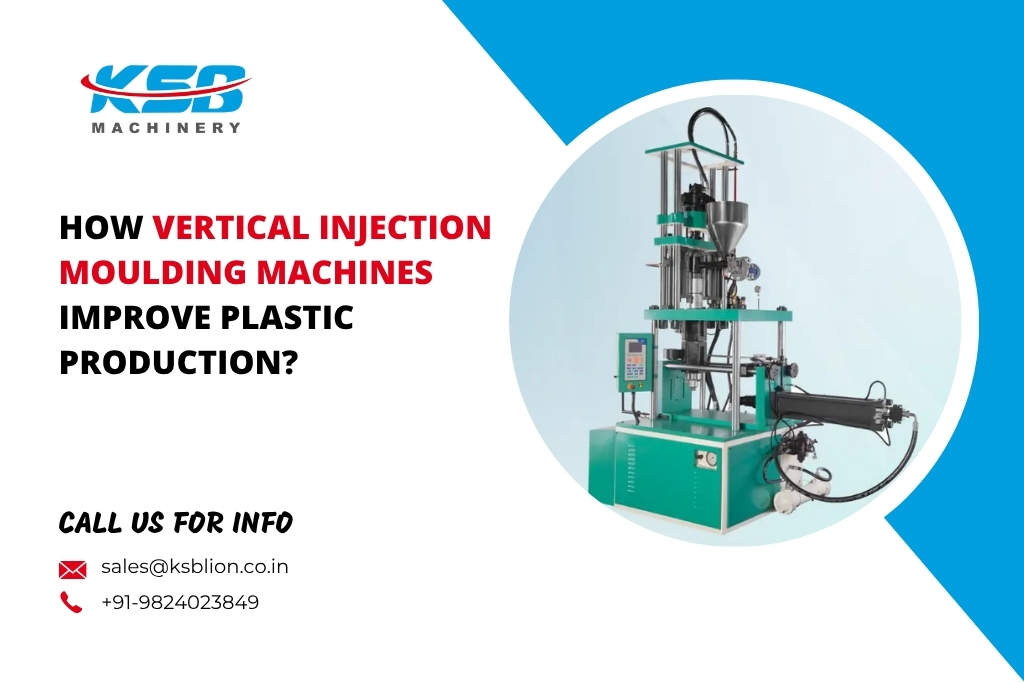
As plastic manufacturing becomes more focused on precision and process consistency, manufacturers are looking for machinery that can handle specialised production requirements efficiently. A Vertical Injection Moulding Machine can be particularly suitable for applications involving insert moulding, overmoulding, electrical components, automotive parts, and technical plastic products.
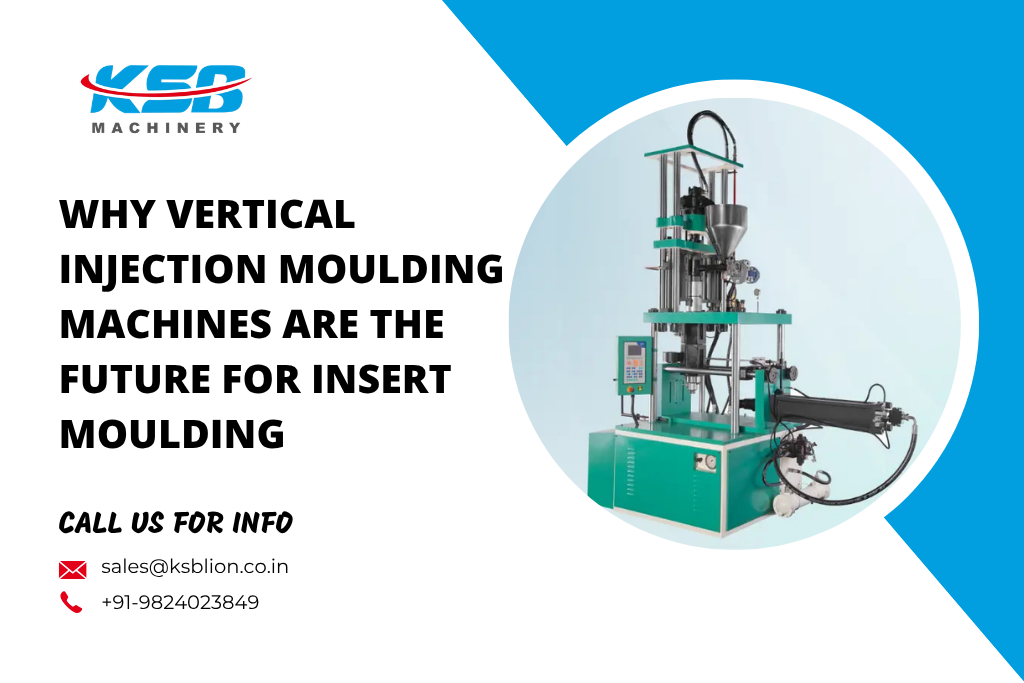
The machine’s vertical configuration can also provide practical advantages when components need to be positioned inside the mould before the injection cycle.
Important Machine Features
The actual features differ between machine models, but manufacturers commonly evaluate several technical areas.
Vertical Clamping Arrangement
The vertical configuration provides access to the moulding area and can be useful for insert-loading operations.
Injection Control
Accurate control of injection speed and pressure can contribute to consistent mould filling.
Temperature Control
Maintaining suitable barrel and material temperatures is important for stable plasticisation and moulding.
Clamping Control
The clamping system must provide sufficient force to keep the mould closed during injection.
Machine Controls
Modern controls can allow operators to set and monitor process parameters such as:
- Injection pressure
- Injection speed
- Holding pressure
- Temperature
- Cooling time
- Cycle time
How Automation Can Improve Production?
Automation is becoming increasingly important in modern plastic manufacturing.
A vertical injection moulding setup can potentially be combined with automation for:
Insert Loading
Automated systems can position inserts in the mould before injection.
Part Removal
Finished components can be removed using suitable automation equipment.
Material Handling
Material supply can be automated to reduce manual handling.
Inspection
Vision systems and sensors can be integrated into suitable production lines for selected quality checks.
Data Monitoring
Connected systems can monitor production parameters and machine performance.
The appropriate automation level depends on production volume, component design, cycle time, and investment requirements.
Choosing the Right Plastic Material
A Vertical Injection Moulding Machine can process different thermoplastic materials depending on its design and specifications.
Common materials used in injection moulding include:
- PP
- PE
- ABS
- PA
- PC
- POM
- Engineering thermoplastics
The material selection depends on the component’s required:
- Strength
- Flexibility
- Temperature resistance
- Chemical resistance
- Appearance
- Dimensional stability
Manufacturers should confirm material compatibility with the selected machine and mould.
Why Manufacturer Support Matters?
Selecting machinery from a capable manufacturer can simplify installation and long-term operation.
Before purchasing, manufacturers should consider whether the supplier provides:
- Installation assistance
- Operator training
- Technical support
- Spare parts
- Maintenance guidance
- Troubleshooting support
- Machine documentation
For businesses searching for a Vertical Injection Moulding Machine Manufacturer in India, these factors can be as important as the initial machine price.
Improving Quality with Process Control
Production quality depends on maintaining appropriate processing conditions.
Injection Speed
Injection speed affects how the molten plastic fills the mould.
An appropriate setting can help achieve more consistent filling and reduce certain moulding defects.
Injection Pressure
Pressure needs to be suitable for the material, mould, and component design.
Holding Pressure
Holding pressure can influence part packing and dimensional stability.
Temperature
Barrel and mould temperatures should be controlled according to the material’s processing requirements.
Cooling Time
Sufficient cooling helps the component solidify before mould opening and removal.
Common Moulding Issues to Monitor
Even with modern machinery, incorrect processing conditions can lead to defects.
Short Shots
Insufficient filling can occur when material flow or processing conditions are unsuitable.
Flash
Excess plastic may appear along the mould parting line when conditions such as clamping or injection pressure are inappropriate.
Warpage
Uneven cooling, material behaviour, or mould conditions can contribute to dimensional distortion.
Sink Marks
Local depressions may occur due to factors such as material shrinkage and insufficient packing.
Burn Marks
Improper venting or excessive injection conditions can contribute to burn marks in certain moulding situations.
Proper mould design and process optimisation can help reduce these problems.
Role of Mould Design
The machine is only one part of the injection moulding process.
Mould design can influence:
- Material flow
- Cooling
- Part quality
- Cycle time
- Ejection
- Insert positioning
For insert moulding, accurate positioning of the insert is particularly important.
The mould should be designed according to the product, material, machine, and production process.
Importance of Energy Efficiency
Energy consumption is another factor manufacturers may consider when selecting injection moulding equipment.
Overall energy use can depend on:
- Machine configuration
- Motor technology
- Heating system
- Cycle time
- Material
- Production volume
- Machine utilisation
Manufacturers should compare actual machine specifications and operating conditions rather than relying on general energy-saving claims.
Vertical vs Horizontal Injection Moulding Machines
Both machine configurations have their own suitable applications.
| Feature | Vertical Machine | Horizontal Machine |
| Mould Orientation | Vertical | Horizontal |
| Insert Moulding | Often suitable | Also possible |
| Insert Loading | Convenient for selected processes | Depends on setup |
| Overmoulding | Suitable for selected products | Suitable for many products |
| Machine Layout | Vertical clamping arrangement | Horizontal clamping arrangement |
| Application | Often used for specialised components | Widely used for general injection moulding |
The right choice depends on the product, mould, production volume, automation, and factory layout.
Frequently Asked Questions
What is a Vertical Injection Moulding Machine?
A Vertical Injection Moulding Machine is an injection moulding machine with a vertically arranged clamping and moulding system. It is commonly considered for applications involving insert moulding and overmoulding.
What is vertical injection moulding used for?
It can be used for selected automotive, electrical, electronics, industrial, consumer, and technical plastic components.
What materials can be processed?
Depending on the machine specification, common thermoplastics such as PP, PE, ABS, PA, PC, POM, and other materials may be processed.
Material compatibility should be confirmed with the machine manufacturer.
How do I choose the right machine size?
Machine size should be evaluated based on the required clamping force, injection capacity, mould dimensions, component weight, material, and production requirements.
Can vertical injection moulding machines be automated?
Yes. Suitable systems can be integrated for insert loading, component removal, material handling, inspection, and other production tasks.
How can manufacturers reduce moulding defects?
Manufacturers can focus on proper material preparation, mould maintenance, temperature control, injection parameters, cooling, mould design, and regular process monitoring.
Looking for a Vertical Injection Moulding Machine?
Choosing the right machine starts with understanding your product, mould, material, production volume, and insert-moulding requirements.
Contact KSBLION to discuss your vertical injection moulding machine requirements and explore a suitable machine configuration.
Conclusion
A Vertical Injection Moulding Machine can support plastic manufacturers looking for controlled production, insert moulding, overmoulding, and efficient component handling. Its vertical configuration can be particularly useful for specialised production processes where inserts need to be positioned before injection. However, machine selection should be based on practical production requirements. Clamping force, injection capacity, mould dimensions, material compatibility, cycle time, automation, energy requirements, and technical support should all be evaluated before making a decision.
For manufacturers in India exploring vertical injection moulding equipment, KSBLION can be considered when discussing specific machine and production requirements. The final machine should always be selected according to the product, mould, material, production conditions, and verified manufacturer specifications.