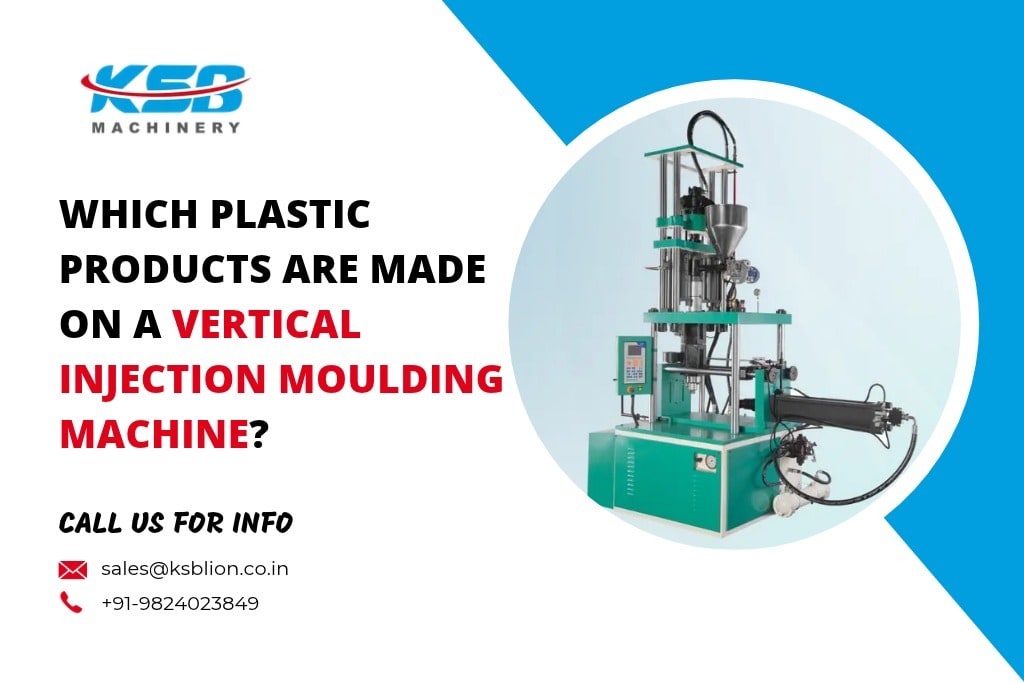
See what you can make on a vertical machine, and why some parts suit it better than others.
A vertical injection moulding machine is best for small and medium parts that need a metal insert or a second material placed inside the mould. Common examples are electrical plugs, connectors, switch parts, knobs, handles, bushings, valves and taps. If your part has no insert, a horizontal machine is often the easier choice.
Key Takeaways
- Vertical machines work best for insert moulding and overmoulding.
- Electrical parts, handles, valves and bushings are the most common products.
- The mould lies flat, so inserts stay in place while the mould closes.
- Parts do not fall out on their own, so you take them out by hand or with a robot.
Introduction
Many buyers ask one simple question before ordering a machine: what can I actually make on it? A vertical injection moulding machine does not suit every product. It works best for a certain group of parts, and knowing that group can save you from a wrong purchase.
This blog lists the plastic products made on a vertical machine, explains why each one suits it, and shows how to check if your own product fits.
Table of Contents
- What Makes a Vertical Machine Different?
- Plastic Products Made on a Vertical Machine
- Insert Moulding and Overmoulding Explained
- Products That Do Not Suit a Vertical Machine
- How to Check If Your Product Fits
- Care Tips for Insert Jobs
- Safety and Compliance Note
- FAQs
- Conclusion
What Makes a Vertical Machine Different?
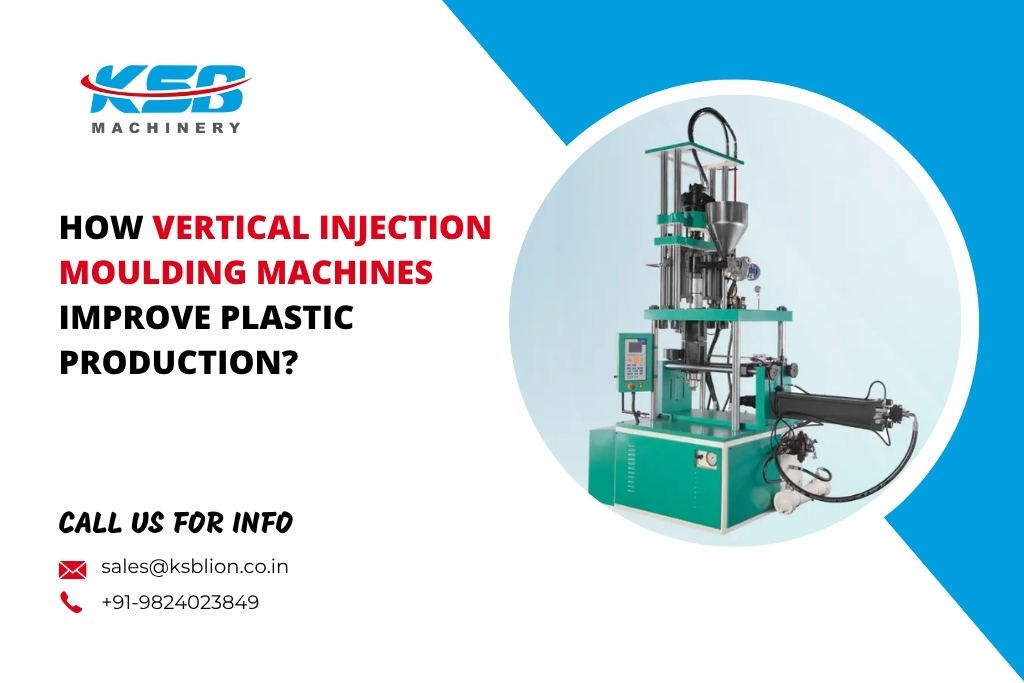
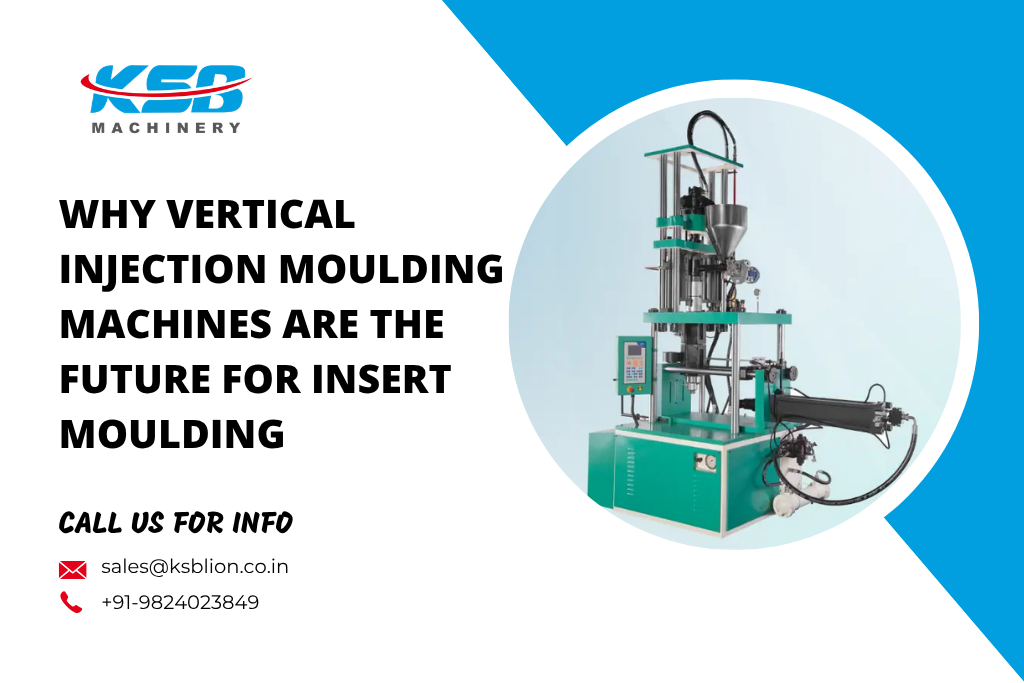
In a vertical machine, the mould opens and closes up and down, like a press. The bottom half of the mould lies flat on the table. This one fact decides what the machine is good at.
You can place a metal pin, a nut or a rubber part into the open mould, and it stays where you put it. On a horizontal machine, the same insert could slip or fall. Many vertical machines also have a rotary table. While one mould is being filled, the operator loads the next one.
For a side-by-side look, read our blog on What Is the Difference Between Horizontal Molding Machine vs Vertical Molding Machine.
Plastic Products Made on a Vertical Machine
Here are the main product groups, and why each one is a good match.
Electrical and electronic parts. Plugs, sockets, switch bodies and cable connectors are a top use. These parts hold metal pins, and the plastic must wrap around them tightly. Our blog on Consumer Electronics Injection Moulding Shaping Innovation shows how big this field has become.
Handles, knobs and grips. Tools and kitchen items often have a metal core with a plastic or soft grip around it. The core goes into the mould first, and plastic is shot around it.
Valves, taps and small fittings. Parts with brass threaded inserts need a firm hold during moulding. The flat mould gives that hold.
Bushings, small gears and clips. These parts mix metal and plastic, and the insert must stay perfectly in position.
Everyday small items. Toothbrushes, combs, spoons and key chains are also made on vertical machines, mostly in small runs. A horizontal machine can make these too.
| Product Group | Why Vertical Suits It | Common Insert or Material |
| Plugs and connectors | Metal pins stay in place | Metal pins, nylon-type plastics |
| Handles and knobs | Core stays centred | Steel or brass core |
| Valves and taps | Threaded insert is held firm | Brass insert |
| Bushings and gears | Insert stays flat while mould closes | Metal sleeve |
| Soft grips and seals | Second material goes over a ready part | Rubber or silicone over hard plastic |
These products end up in electrical fittings, home plumbing, kitchen and tool items, and small automotive and appliance parts. A small workshop gains a lot here. With one machine and a few different moulds, you can serve several customers, and you do not have to depend on one product to keep the machine busy.
Insert Moulding and Overmoulding Explained
Insert moulding means placing a ready-made part, usually metal, in the mould before plastic goes in. Overmoulding means moulding one material over another, such as a soft grip over a hard base. Vertical machines handle both well. In overmoulding, the ready base part sits in the mould, and the second material bonds to it as it cools. Good bonding depends on a clean insert and the right mould temperature.
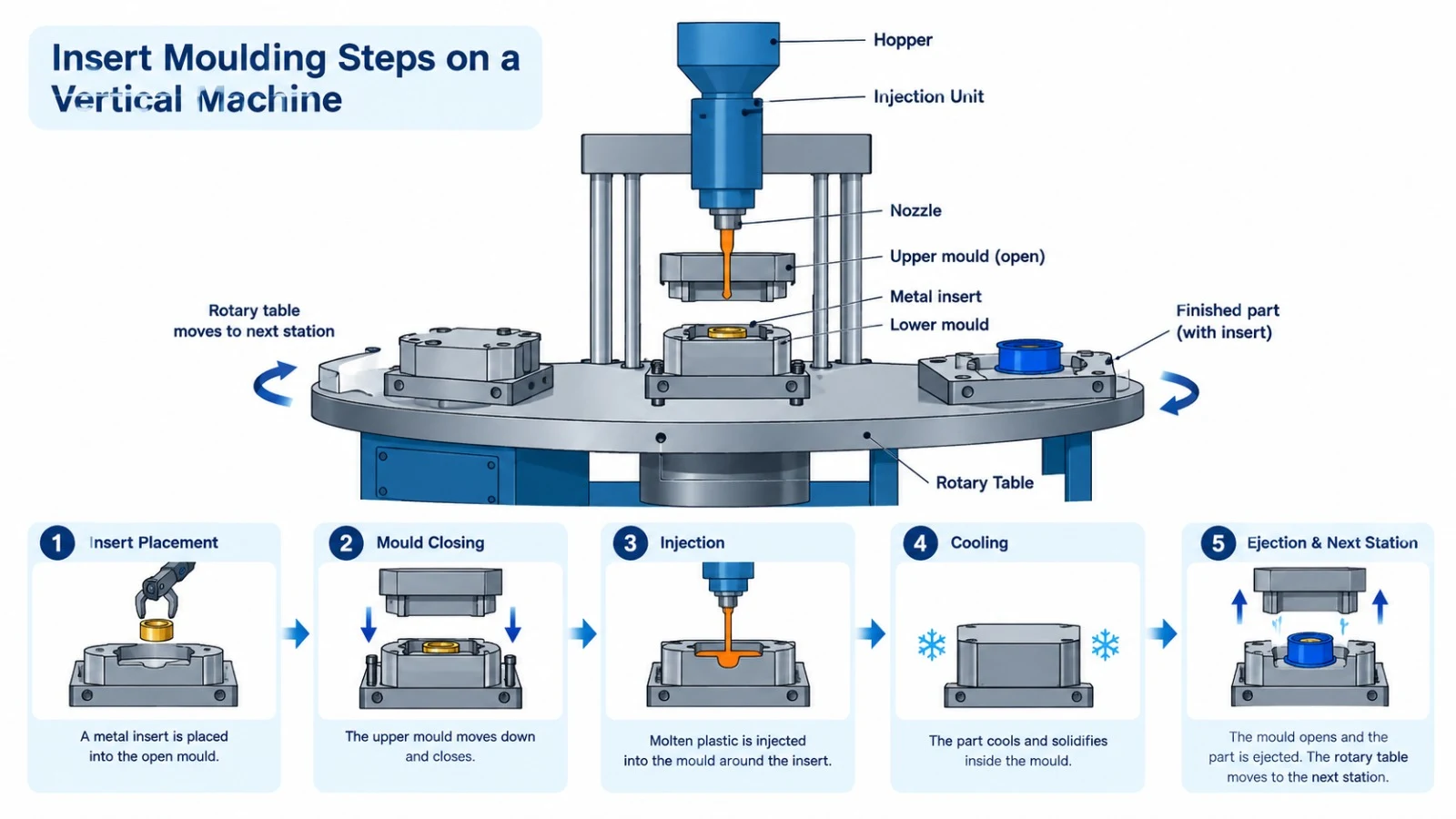
The steps are simple:
- The operator opens the mould and places the inserts.
- The table moves the loaded mould under the injection unit.
- The mould closes and plastic fills around the inserts.
- While the part cools, the operator loads the second mould.
- The mould opens and the finished part is taken out.
Loading by hand works well for small and medium volumes. For higher volumes, a Robotic Injection Moulding Machine can load inserts and remove parts, which keeps the cycle steady.
Products That Do Not Suit a Vertical Machine
A vertical machine is not the answer for every job. Parts do not drop out on their own after moulding, so someone must remove them. This slows very high-volume work.
This is why many plants keep both machine types. They use vertical machines for insert and overmoulded parts, and horizontal machines for simple, fast jobs. Avoid choosing a vertical machine for these cases:
- Large, heavy parts made in big volumes
- Simple parts with no insert, produced in very high numbers
- Lines that depend on parts falling out and moving straight to a conveyor
| Feature | Vertical Machine | Horizontal Machine |
| Insert placing | Easy, inserts stay flat | Harder, inserts may slip |
| Part removal | By hand or robot | Parts fall by gravity |
| Floor space | Less | More |
| Best for | Insert and overmoulded parts | Simple, high-volume parts |
How to Check If Your Product Fits
Ask yourself four quick questions before you choose a machine.
| Question | If Yes | If No |
| Does the part have a metal or ready-made insert? | Vertical suits it | Horizontal may be easier |
| Is the part small or medium in weight? | Good fit | Check a larger machine |
| Is the volume low to medium? | Hand loading works | Think about a robot |
| Do you need two materials in one part? | Overmoulding works well | Single material is simple |
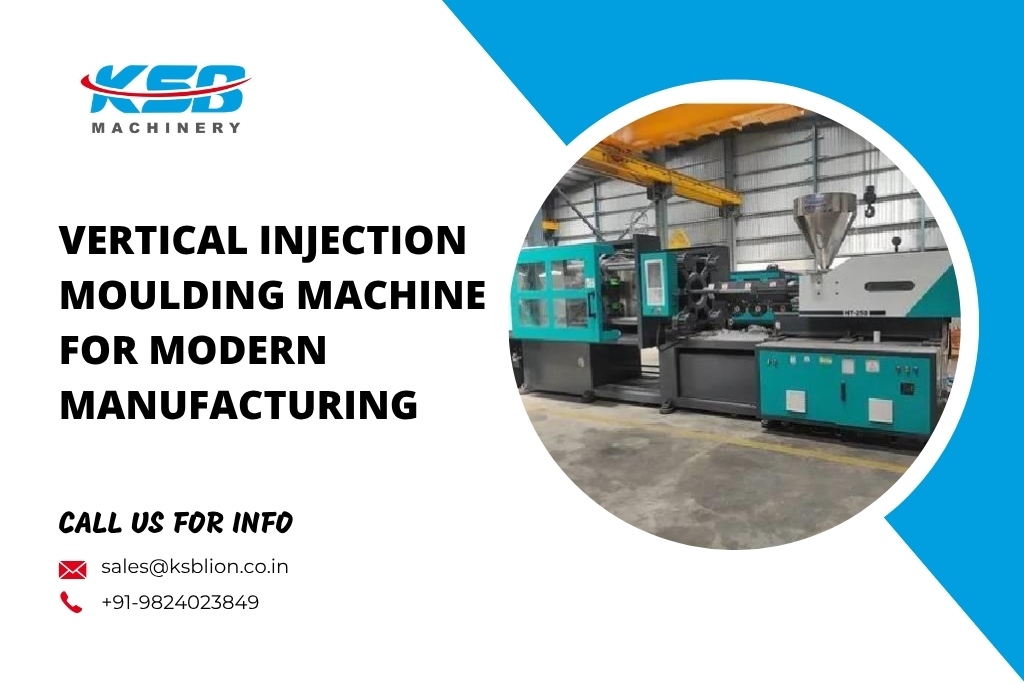
Our vertical machines handle clamping force from 17 to 48 ton and shot weight from 100 gm to 5 kg, which covers most of the parts listed above. For a wider view of how these machines fit modern plants, see Vertical Injection Moulding Machine for Modern Manufacturing. If you already have a product drawing, send it to us through the Contact Us page and we will tell you if it suits a vertical machine. A simple example: a plug with two brass pins, made in a few thousand pieces a month, is a very good match for hand loading on a rotary table machine.
Care Tips for Insert Jobs
Insert jobs need a little extra care, because a wrongly placed insert can damage the mould or spoil a whole batch. Train every operator to place inserts the same way each time.
- Keep inserts clean and dry, because oil and dust weaken the bond.
- Follow your mould maker's advice if inserts need pre-heating.
- Check the rotary table lock and sensors every day.
- Wipe the mould halves often so a stray insert does not get pinched.
Safety and Compliance Note
The operator reaches into the mould area during loading, so safety gates and sensors must always work. Never bypass them. Machines should follow recognised safety rules such as ISO 20430, and operators should be trained before running insert jobs. Keep hands out of the mould area whenever the table is moving.
FAQs
Which products are made on a vertical injection moulding machine?
Electrical plugs and connectors, handles, knobs, valves, taps, bushings, small gears and many everyday items like combs and toothbrushes.
Why is a vertical machine used for insert moulding?
The mould lies flat, so metal inserts stay in place while the mould closes. This keeps the part accurate.
Can I make everyday plastic items on a vertical machine?
Yes, small items like spoons and key chains can be made. For very high volumes of simple items, a horizontal machine is usually faster.
What size of parts suits a vertical machine?
Small and medium parts. Our vertical machines handle shot weight from 100 gm to 5 kg and clamping force from 17 to 48 ton.
Do vertical machines need a robot?
No. Hand loading works for small and medium volumes. A robot helps when volumes are higher.
Is vertical or horizontal better for electrical parts?
For parts with metal pins or contacts, a vertical machine is usually the better fit.
Conclusion
The best products for a vertical machine are small and medium parts where metal and plastic, or two materials, work together. Plugs, connectors, handles, valves and bushings are the clear examples. If your part has no insert and runs in huge numbers, a horizontal machine may serve you better. At KSB Machinery LLP, we look at your drawing and volume first, so you buy the machine that fits your product and not the other way round. Check your part against the questions above, and you will know quickly which way to go. A little planning at this stage saves months of rework later.