
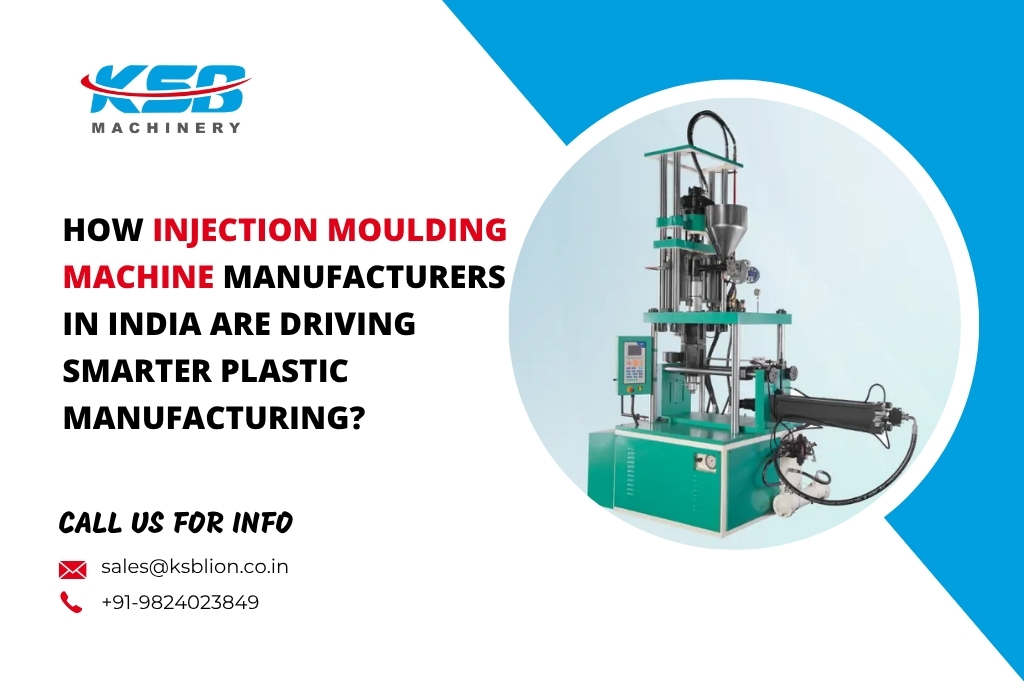
India’s plastics industry is moving toward more automated and controlled production. Manufacturers across automotive, packaging, electrical, consumer goods, and industrial sectors are looking for equipment that can deliver consistent output while managing energy use and production demands.
This shift is influencing Injection Moulding Machine Manufacturers in India.Machine buyers are increasingly looking beyond basic specifications. They want to understand how a machine will perform with their mould, material, product design, cycle requirements, and factory setup.Modern injection moulding machines are therefore becoming part of a wider production system that can include automation, servo technology, sensors, process monitoring, and auxiliary equipment.
KSBLION is associated with injection moulding machine solutions for plastic processing applications, including machines designed around modern manufacturing requirements.
Why Is India’s Injection Moulding Machine Industry Changing?
India’s manufacturing sector is expanding across several industries that depend on plastic components.Automotive parts, electrical products, packaging components, household products, consumer goods, and industrial components all require different levels of production precision and consistency.
This diversity is changing how companies evaluate machinery.A machine that works well for one application may not be appropriate for another. Product geometry, polymer characteristics, mould design, shot size, clamping requirements, cycle time, and production volume can all influence machine selection.As a result, modern Plastic Injection Moulding Machine Manufacturers increasingly need to understand the complete production application rather than simply supply equipment.
From Machine Selection to Application-Based Manufacturing
A practical machine selection process starts with the product.
The manufacturer needs to consider questions such as:
- What material will be processed?
- What is the product’s weight and geometry?
- What mould will be used?
- What production volume is expected?
- What cycle time is required?
- What level of automation is appropriate?
These factors help determine the suitable machine configuration.This application-focused approach can also help manufacturers avoid selecting equipment based solely on a single specification such as clamping force.For production businesses, the relationship between the machine, mould, material, product, and process is critical.
What Modern Plastic Manufacturers Expect From Injection Moulding Machines?
Production environments are becoming more demanding.Manufacturers need repeatable processes because variations in moulding conditions can affect product quality, productivity, and material consumption.Modern injection moulding machines are therefore evaluated on several factors rather than one headline feature.
Precision and Repeatability
Consistent injection speed, pressure, temperature, and machine movement can contribute to stable moulding conditions.For components with tight dimensional requirements, repeatability becomes particularly important.A controlled process can help manufacturers maintain more consistent parts across production cycles.
Energy Efficiency
Energy consumption has become a more important consideration as manufacturers examine factory operating efficiency.Servo-driven systems can adjust motor operation according to machine demand, depending on the machine architecture and process.
This can reduce unnecessary energy use during periods when full hydraulic power is not required.Actual energy performance depends on machine configuration, moulding conditions, operating pattern, material, and production cycle.
Automation Compatibility
Modern factories increasingly connect injection moulding machines with other equipment.
Examples include:
- Robots
- Conveyors
- Material handling systems
Automation can reduce repetitive manual operations and support more consistent production workflows.The right level of automation depends on production volume, product design, labour requirements, and factory layout.
Why Precision and Repeatability Matter in Plastic Production?
Plastic components often need to maintain consistent dimensions, weight, appearance, and mechanical characteristics.Even small process variations can influence the final product.Injection moulding involves multiple interconnected parameters, including material temperature, injection speed, pressure, cooling conditions, and mould temperature.
If these variables are not controlled properly, manufacturers may experience defects or inconsistent parts.A modern machine can provide more controlled adjustment of important process parameters, but machine capability alone does not guarantee product quality.The mould, material preparation, process settings, operator practices, and maintenance conditions also influence the result.
The Role of Servo-Controlled Systems
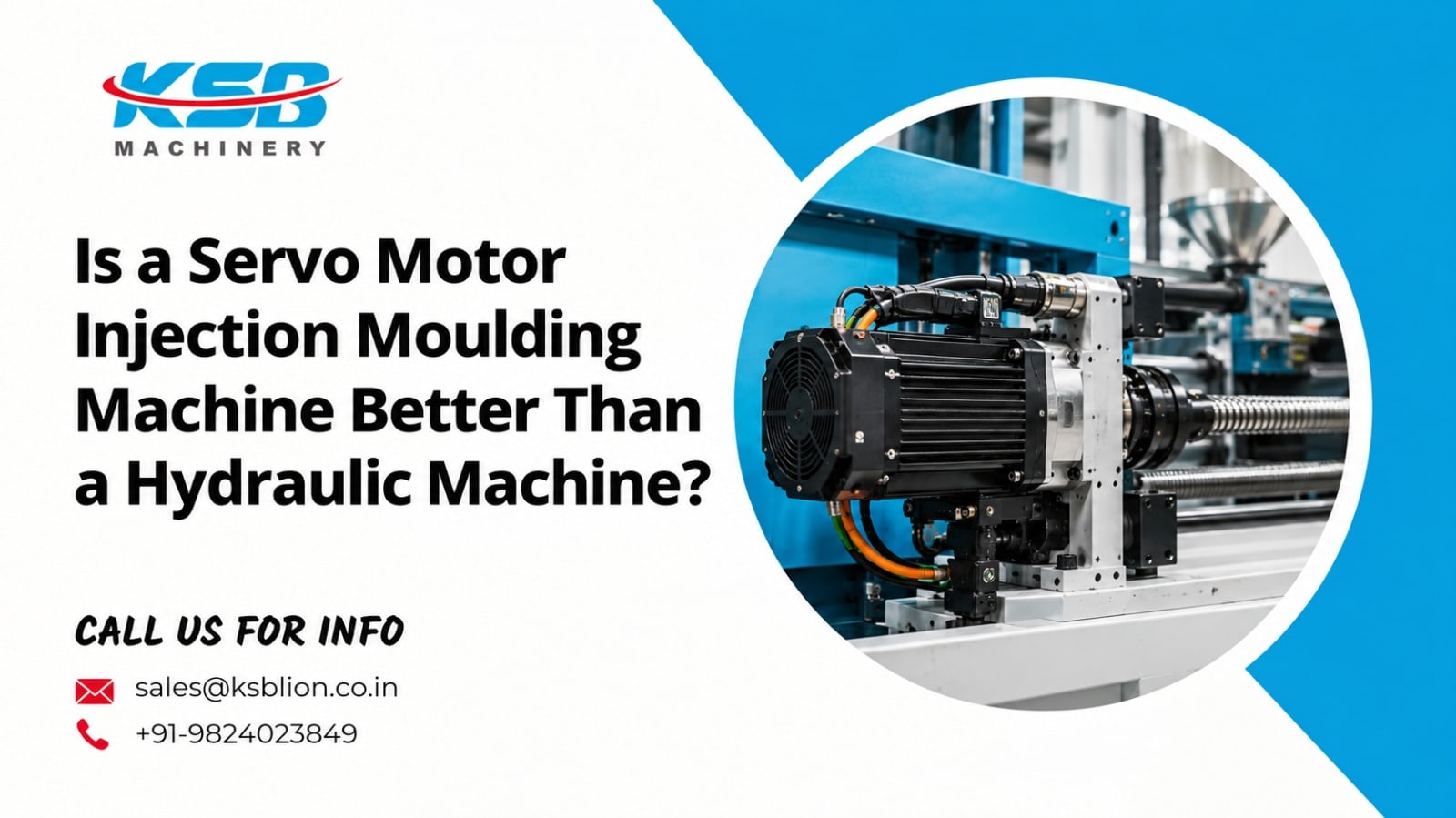
Servo motor technology has become an important development in injection moulding machinery.In suitable machine designs, servo systems provide controlled motor operation and can respond to machine requirements more efficiently than conventional continuously running hydraulic systems.
Potential advantages can include:
- Controlled machine movements
- Responsive pressure and speed control
- Lower unnecessary motor operation
- Improved operating efficiency
For manufacturers considering a Servo Motor Injection Moulding Machine Manufacturer in India, it is important to evaluate the complete machine design rather than focusing only on the presence of a servo motor.The hydraulic system, control technology, injection unit, clamping system, machine construction, and application requirements should all be considered together.
How Servo Technology Is Changing Injection Moulding?
Servo technology is becoming increasingly relevant as plastic manufacturers seek better control over production processes.Traditional hydraulic systems can operate continuously even during periods when full power is not required. Servo-driven systems can instead regulate motor operation according to demand, depending on the machine design.
This approach can contribute to more efficient machine operation.Servo technology can also support controlled machine movements during different stages of the moulding cycle.For production facilities running large numbers of cycles, even small improvements in machine efficiency can become significant over extended operating periods.However, businesses should assess energy performance using actual production conditions rather than relying only on general claims.
Why Energy Efficiency Is Becoming a Major Buying Factor?
Energy is an important operational input for many plastic processing facilities.
When evaluating an injection moulding machine, manufacturers can consider:
- Installed power
- Typical operating power
- Cycle time
- Production output
- Idle periods
- Machine utilisation
- Maintenance requirements
Energy efficiency should be considered alongside productivity and product quality.A machine that uses less energy but does not meet the required production or quality specifications may not be suitable for the application.The objective should be to find a balance between production performance, process stability, energy consumption, and total operating requirements.
Are Injection Moulding Machines Becoming Smarter?
The development of Industry 4.0 is influencing the plastics manufacturing sector.Modern machines can incorporate sensors, digital controls, data collection, and monitoring systems to provide greater visibility into production.Instead of relying entirely on manual observation, manufacturers can increasingly use machine data to understand production conditions.
Relevant information can include:
- Cycle information
- Machine status
- Process parameters
- Production counts
- Alarm conditions
- Maintenance indicators
This data can support production monitoring and help identify changes that may require attention.
Industry 4.0 Does Not Mean Complete Factory Replacement
A common misconception is that Industry 4.0 requires a factory to replace all existing machinery.In practice, manufacturers can introduce digital technologies gradually.A production facility may begin with machine monitoring and data collection before moving toward more advanced automation, predictive maintenance, or integrated production systems.This makes smart manufacturing more practical for businesses at different stages of digital adoption.
What Should Buyers Look for in Injection Moulding Machine Manufacturers in India?
The manufacturer should be evaluated according to the complete production requirement rather than machine specifications alone.Important considerations include machine range, technical support, application understanding, automation compatibility, and long-term service support.For companies comparing Injection Moulding Machine Manufacturers in India, the right supplier should be able to discuss how the machine fits the intended moulding process.
Machine Range
A manufacturer with different machine configurations can provide more flexibility when applications vary.Different products may require different combinations of clamping force, injection capacity, machine dimensions, control systems, and automation.
Technical Support
Installation and commissioning are important stages of machine ownership.Manufacturers should provide suitable technical assistance for setup, operation, troubleshooting, and maintenance according to their service structure.
Application Understanding
The machine should be evaluated together with the mould and material.A technically capable manufacturer should be able to understand the production requirements and recommend a suitable configuration rather than treating every application identically.
Choosing the Right Injection Moulding Machine Manufacturer in India
Selecting an injection moulding machine manufacturer is an important production decision because the machine becomes part of the factory’s long-term manufacturing system.For businesses comparing Injection Moulding Machine Manufacturers in India, the decision should go beyond machine appearance, individual specifications, or promotional claims.
The manufacturer should understand the application and provide equipment that aligns with the product, mould, material, production volume, and factory environment.
Automation Compatibility
Automation is becoming increasingly important in plastic manufacturing.An injection moulding machine may be integrated with robots, conveyors, material handling equipment, mould temperature controllers, dryers, and other auxiliary systems.Before selecting a machine, manufacturers should consider whether the equipment can work effectively with their planned production setup.
Automation can be particularly useful for repetitive operations such as part removal, handling, counting, stacking, and packaging.The objective is not to automate every operation.Instead, manufacturers should identify repetitive tasks where automation can improve consistency and production flow.
Service and Long-Term Support
Machine performance depends not only on initial installation but also on proper maintenance and technical support.
Before purchasing, buyers can ask about:
- Installation and commissioning support
- Maintenance requirements
- Spare parts availability
- Technical assistance
- Troubleshooting support
A machine is a long-term production asset, so service considerations should be part of the selection process from the beginning.
How Modern Manufacturers Are Combining Automation and Efficiency?
The next stage of plastic manufacturing is increasingly focused on connecting different production activities.An injection moulding machine can become one part of a wider automated production cell.For example, a production setup may combine an injection moulding machine with a robotic part-removal system, conveyor, inspection equipment, and production monitoring.
This approach can reduce unnecessary manual handling and create a more consistent workflow.However, automation should be selected according to production requirements.A high-volume manufacturing line may benefit from extensive automation, while a smaller operation may require a simpler setup.The most effective solution is therefore application-specific.
Data-Driven Production
Machine data is becoming more useful for production teams.Manufacturers can use production information to identify patterns such as unusual cycle changes, repeated alarms, or unexpected downtime.This can help production managers investigate potential issues before they become larger operational problems.
Data can also support preventive maintenance planning.Instead of waiting for a machine component to fail, maintenance teams can use operating information and scheduled inspections to plan servicing.This is one reason why connected and digitally monitored machines are becoming more relevant to modern factories.
Why Energy Efficiency and Productivity Must Be Considered Together?
Energy efficiency is an important manufacturing goal, but it should not be evaluated independently from production output.For example, manufacturers should consider the relationship between:
Energy consumption + cycle time + production output + product quality
A machine that maintains stable production while using energy efficiently can provide greater operational value than one evaluated only on its power rating.Servo motor technology is one development supporting this objective.For suitable applications, servo-driven injection moulding machines can regulate motor operation according to demand and support controlled machine movements.The actual benefit depends on the machine design and production conditions.This is why businesses should evaluate machine performance according to their own production requirements.
KSBLION and Modern Injection Moulding Requirements
KSBLION provides injection moulding machine solutions for plastic manufacturing applications.The brand’s machine portfolio can be considered by manufacturers looking for equipment aligned with different production requirements, including applications where automation, servo technology, process control, and energy efficiency are important considerations.When evaluating a machine from KSBLION or any other Injection Moulding Machine Manufacturer in India, buyers should compare the machine configuration with their actual application.
Important questions include:
- What product will be manufactured?
- Which polymer will be processed?
- What mould size and specifications are required?
- What production volume is expected?
- What cycle time is targeted?
- Is automation required?
- What level of process monitoring is useful?
This application-first approach can help manufacturers make a more informed equipment decision.
Trends Shaping the Future of Injection Moulding in India
The Indian injection moulding industry is likely to continue moving toward greater automation, process monitoring, and energy-conscious production.Several developments are becoming increasingly relevant.
Smart Machine Monitoring
Digital monitoring can provide production teams with greater visibility into machine status and process information.
Servo and Energy-Efficient Systems
Manufacturers are increasingly examining servo-driven and other energy-conscious machine technologies as part of their factory efficiency strategies.
Connected Production
Machine connectivity can support data collection and communication between production equipment and factory management systems.
Greater Process Consistency
As manufacturers produce more demanding components, repeatability and process control will remain important priorities.These trends indicate that future injection moulding machines will increasingly be evaluated as part of a complete manufacturing ecosystem rather than as standalone equipment.
Conclusion
The Indian injection moulding industry is moving toward smarter, more efficient, and increasingly connected manufacturing.For businesses searching for Injection Moulding Machine Manufacturers in India, the most useful approach is to evaluate how a machine fits the complete production process rather than focusing on one specification.
Precision, repeatability, energy efficiency, automation compatibility, digital monitoring, and technical support are becoming important factors in modern machine selection.The right machine ultimately depends on the product, mould, material, production volume, cycle requirements, and factory setup.
KSBLION is one brand that manufacturers can consider when exploring injection moulding machine solutions for modern plastic production.As India’s plastics manufacturing sector continues to develop, manufacturers that combine reliable machinery with automation, process control, and efficient production practices will be better positioned to respond to changing industrial requirements.