
Rigid PVC and polyethylene look alike on the shop floor, but they behave very differently inside a machine. Here is what changes.
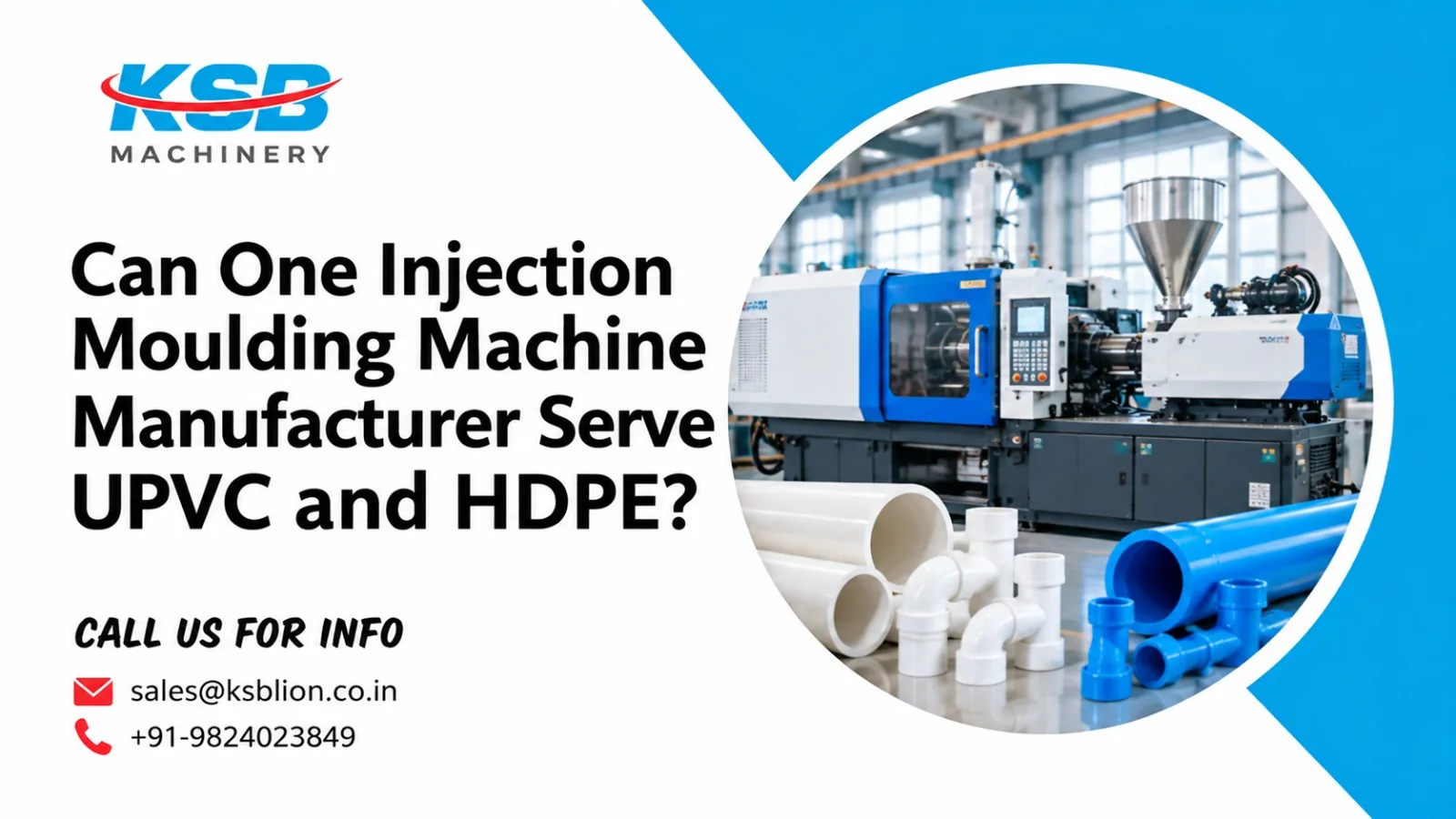
Yes, one injection moulding machine manufacturer can build machines for both UPVC and HDPE. But the two materials need different screw, barrel, mould and cooling setups, so many factories keep them on separate machines. Tell your manufacturer the material, product weight and mould size before you buy.
Key Takeaways
- UPVC is heat-sensitive. It needs corrosion-resistant parts and a short stay in the barrel.
- HDPE handles heat better, but it shrinks more and needs strong mould cooling.
- Switching one machine between the two needs careful purging and sometimes hardware changes.
- Ask for a material-specific configuration, not a one-size-fits-all machine.
Introduction
Plastic product makers often ask: “Can I run UPVC today and HDPE tomorrow on the same machine?” The honest answer is “sometimes, but not carelessly.” This blog explains how the two plastics behave, what a machine needs for each, and how to choose a supplier.
What Are UPVC and HDPE in Injection Moulding?
UPVC is unplasticised polyvinyl chloride, a rigid plastic. HDPE is high-density polyethylene, a tough and chemical-resistant plastic. Both are thermoplastics. The machine melts the granules, injects the melt into a mould, and the part cools and hardens.
That is where the similarity ends. A manufacturer builds the clamping unit, injection unit, drive system and controller. It also chooses the screw, barrel and other parts that touch the melt, and those choices depend on the material. The melt path (screw, barrel and nozzle) matters most, because that is where heat, pressure and chemistry act on the plastic.
Where Are These Plastics Used?
UPVC is common in pipe fittings, plumbing parts, valves and electrical fittings. HDPE is used for crates, caps, household containers, agricultural fittings and industrial parts. A plant that makes products in both materials will naturally want one supplier. KSBLION lists separate machines for each material: the UPVC Injection Molding Machine, the CPVC Injection Molding Machine and the HDPE Injection Moulding Machine.
How UPVC and HDPE Behave Inside the Machine
UPVC is heat-sensitive. If it gets too hot, or sits in a hot barrel too long, it starts to break down. The breakdown releases hydrogen chloride gas, which corrodes steel and leaves burn marks or black streaks on parts. So a UPVC machine must remove shear heat from the barrel, keep the melt moving and use corrosion-resistant surfaces. A resin maker’s processing note also lists barrel cooling blowers and chrome-plated stainless steel moulds for PVC and CPVC.
HDPE is more forgiving. It does not corrode steel and tolerates a wider temperature range. Its challenge is shrinkage. HDPE can shrink roughly 2% to 4% as it cools, so uneven cooling gives warped or undersized parts. Cooling also decides the cycle time, so mould cooling matters most.
Time in the barrel, called residence time, is a simple way to compare the two. For UPVC, shorter is safer. The shot should use a fair share of the barrel’s capacity, so the melt does not sit in a large barrel for several cycles. HDPE can usually handle longer holds in the barrel. Its real wait happens in the mould, where the part must cool evenly before ejection.
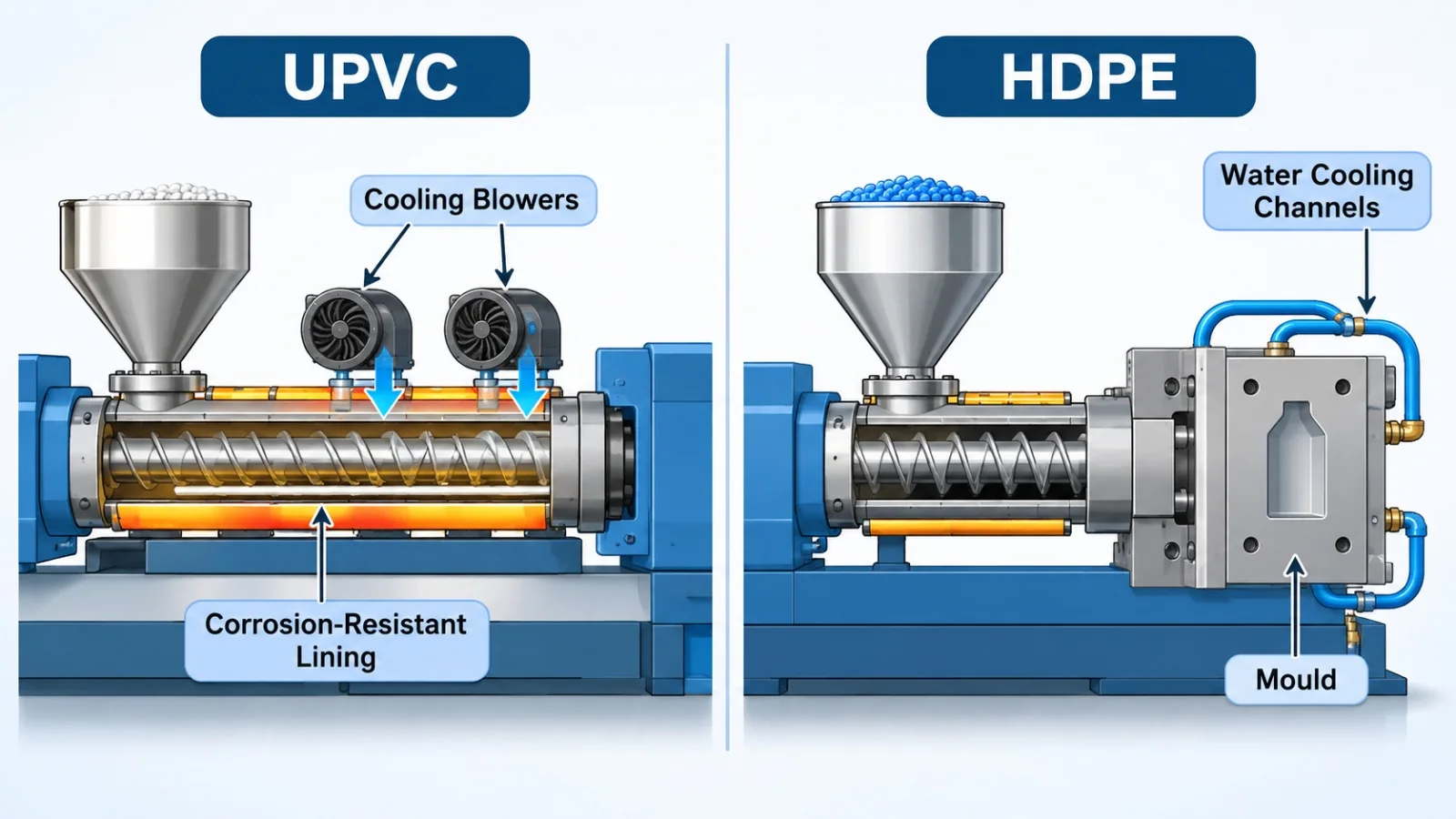
UPVC vs HDPE at a Glance
| Point | UPVC | HDPE |
| Heat sensitivity | High, breaks down if overheated | Low to moderate |
| Corrosion risk | Yes, from hydrogen chloride on breakdown | No |
| Processing window | Narrow | Wider |
| Shrinkage | Low, well under 1% | Higher, roughly 2% to 4% |
| Main concern | Overheating and time in the barrel | Cooling and warpage |
Exact values depend on the grade, so always follow your resin supplier’s datasheet.
Machine Features Each Material Needs
| Feature | UPVC | HDPE |
| Screw and barrel | Smooth flow path, corrosion-resistant finish, low shear | Good mixing and melting |
| Barrel temperature | Tight control, with blowers to remove shear heat | Standard multi-zone heating |
| Mould | Corrosion-resistant steel, thick runners, simple direct gates | Strong cooling channels, even wall thickness |
| Shot size | Avoid very small shots on a large barrel | Match shot to barrel for steady melt |
| Cooling | Moderate | Long and uniform |
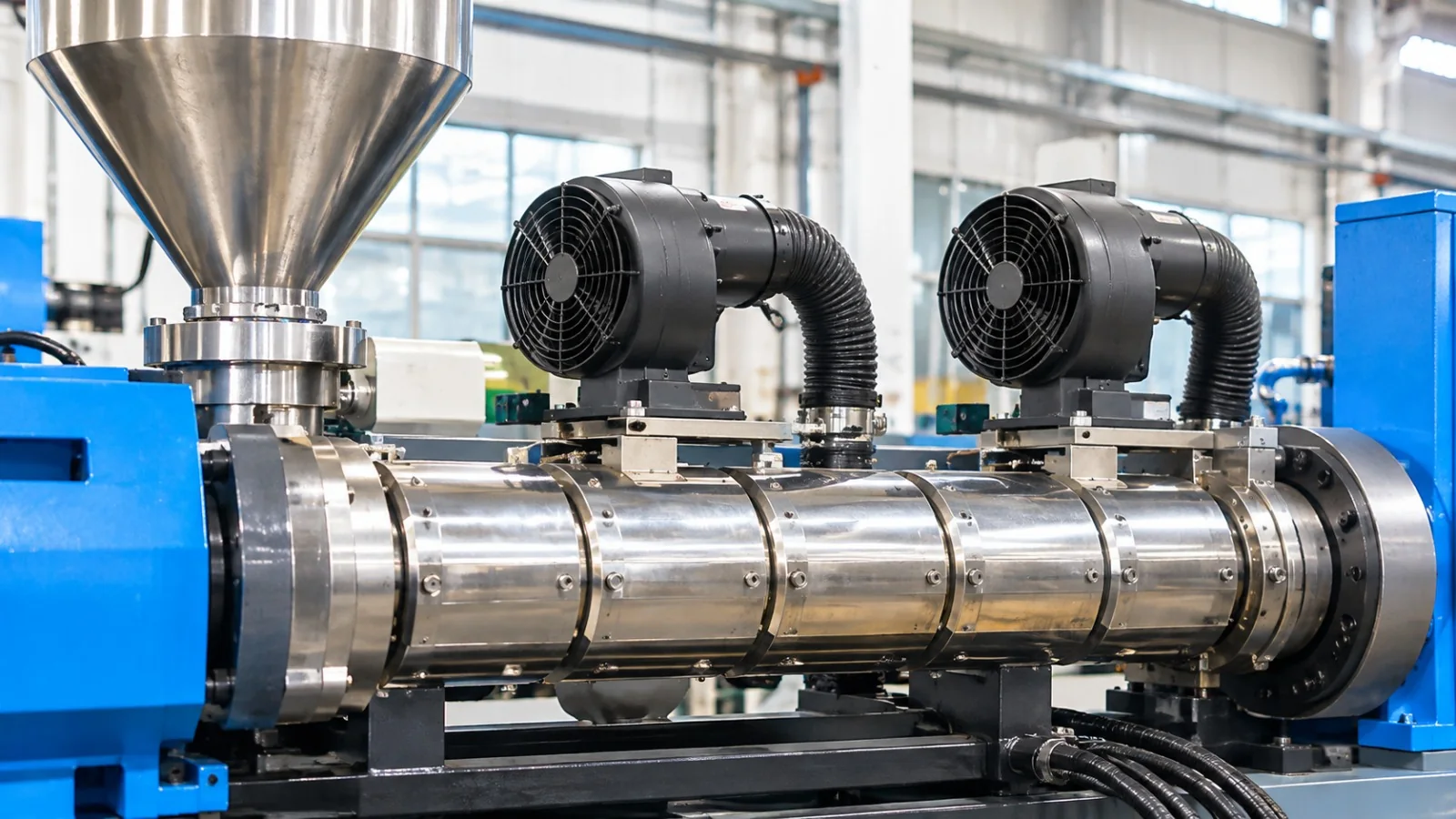
KSBLION machines carry blowers on the barrel zones to control shear heat and prevent thermal degradation of heat-sensitive material such as PVC. The standard horizontal machine specification lists GPPS and PVC/UPVC as materials. For HDPE or CPVC, confirm the exact configuration with the team before ordering.
Can You Run Both Materials on One Machine?
It is possible, but not ideal. Here is why:
- Leftover PVC in the barrel can degrade when the next material needs a different temperature, which causes black specks.
- PVC residue can corrode parts that are not built for it.
- Full purging takes time and material, which cuts output.
Many plants therefore keep a separate machine for PVC. If you must share one, ask the manufacturer to confirm the screw, barrel and nozzle for PVC use, plan the changeover, and purge fully before and after every UPVC run.
Choosing a Manufacturer and Maintaining Your Machine
How to Choose
Pick a manufacturer who asks about your product before quoting. Good signs are experience with your material, the ability to customise, clear after-sales support and quality checks during production. KSBLION, based in Ahmedabad since 1998, handles design, material procurement, manufacture, assembly, delivery and after-sales service under one roof, with stage-wise quality checks. If your plant runs long HDPE cycles, you can also read Is a Servo Motor Injection Moulding Machine Better Than a Hydraulic Machine? to compare drive types.
Also ask what support you get after delivery. A new UPVC line often needs help with temperature settings in the first runs, and an HDPE line may need advice on cooling. A supplier who stays available during trial production saves scrap and time. Ask whether your mould can be tested on the machine, and what service and spare-part support is available for your location.
When you contact our team, share these details:
| Detail | Why it matters |
| Material and grade | Decides screw, barrel and mould needs |
| Product weight and cavities | Decides shot size and clamping force |
| Mould size | Confirms the mould fits the machine |
| Target output | Helps size the machine and cooling |
Basic Care Tips
- Purge PVC fully before shutdown. Never leave it sitting in a hot barrel.
- Check screw and barrel wear on a regular schedule.
- Keep mould cooling channels clean for HDPE.
- Follow the lubrication schedule and check temperature controllers often.
Safety and Compliance Note
Overheated PVC releases hydrogen chloride gas. Keep the work area well ventilated, avoid leaving PVC in a heated barrel and follow the resin supplier’s safety data sheet. Use proper protective equipment around hot surfaces and follow your factory’s safety rules and local regulations. This blog gives general information and does not replace the machine manual.
FAQs
Can one injection moulding machine process both UPVC and HDPE?
Yes, with care. The machine needs a screw, barrel and nozzle suited to PVC, and it must be fully purged between materials. Many plants use separate machines to avoid contamination.
Why is UPVC harder to process than HDPE?
UPVC breaks down if it is too hot or stays too long in the barrel. HDPE tolerates a wider temperature range, so small mistakes cost less.
What happens if UPVC stays too long in the barrel?
It degrades, releases hydrogen chloride gas and leaves black streaks or burn marks on parts. It can also corrode machine parts that are not corrosion-resistant.
Can a UPVC machine be used for CPVC?
CPVC is processed like PVC but at higher temperatures and with even less time in the barrel. Confirm with your manufacturer before using a UPVC machine for CPVC.
Does HDPE need more cooling time than UPVC?
Usually yes. HDPE shrinks more, so it needs longer and more uniform mould cooling to avoid warpage.
Does HDPE need a higher clamping force than UPVC?
Not by material name alone. Clamping force depends mainly on the projected area of the part and the injection pressure used. Share your product weight, cavities and mould size so the manufacturer can size the machine correctly.
Conclusion
UPVC and HDPE can both be moulded on injection machines, but they are not interchangeable in practice. UPVC asks for careful heat control and corrosion-resistant parts, while HDPE asks for strong cooling. A good manufacturer will ask about your material and product first, and then set up the machine to match. At KSBLION, our team has built plastic injection moulding machines in Ahmedabad since 1998, and we help buyers choose a configuration for UPVC, CPVC or HDPE work based on their actual product. Share your material and mould details, and pick the machine that fits the job, not just the price.