In today’s competitive manufacturing industry, producing high-quality, precise components is essential. High-precision hydraulic injection moulding plays a critical role in achieving consistent results for industries like automotive, electronics, medical devices, and consumer goods. Proper extruder hydraulic injection moulding optimization ensures maximum efficiency, reduced waste, and superior product quality.
For manufacturers looking to invest in advanced machinery, consulting a trusted Injection Moulding Machine Manufacturer is key to accessing the latest technology and process expertise.
What is Extruder Hydraulic Injection Moulding?
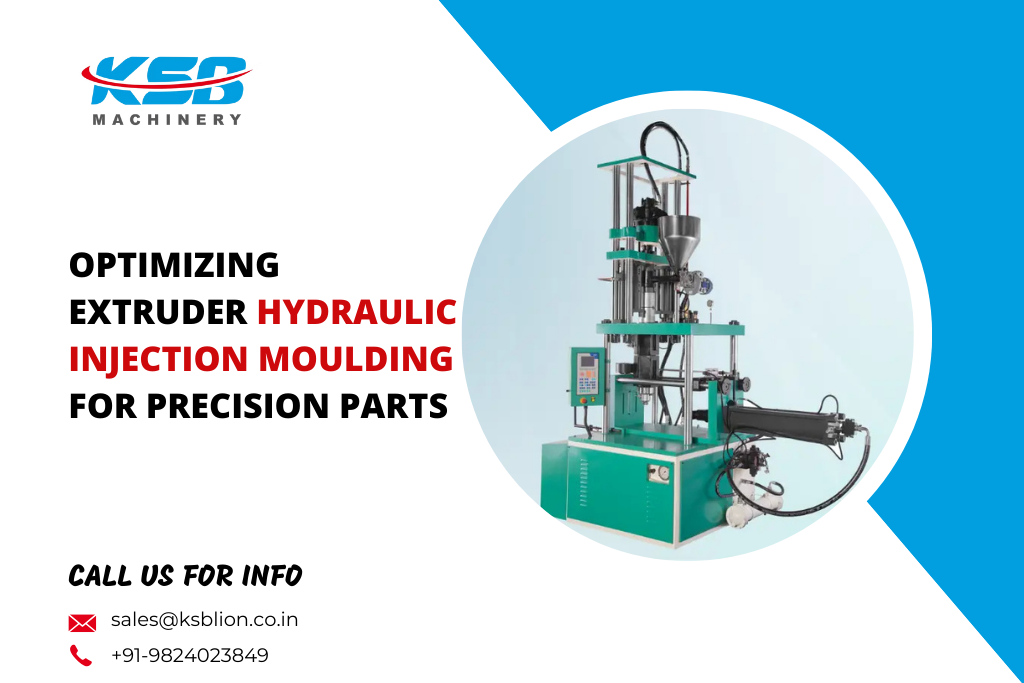
An extruder hydraulic injection moulding machine combines the principles of hydraulic injection with extrusion to produce complex, high-precision parts. These machines use hydraulic pressure to inject molten material into moulds, offering excellent control over speed, pressure, and temperature.
Unlike standard injection moulding machines, hydraulic systems provide:
- Superior force and precision
- Better repeatability for complex geometries
- Enhanced control over precision injection moulding process parameters
This makes them ideal for applications where dimensional accuracy and surface finish are critical.
Key Factors in Extruder Hydraulic Injection Moulding Optimization
Optimizing an extruder hydraulic injection moulding machine involves adjusting multiple process parameters to achieve consistent, high-quality output. Some of the critical factors include:
1. Injection Pressure and Speed
The pressure and speed at which the molten material is injected into the mould determine the part’s density, surface finish, and dimensional accuracy. Too high a pressure can cause flash or mould damage, while too low can lead to incomplete filling.
2. Melt Temperature
Maintaining the correct melt temperature ensures uniform flow and prevents degradation of the polymer. Each material has an optimal temperature range, and precise control is necessary for high-precision hydraulic injection moulding.
3. Holding Pressure and Cooling Time
Proper holding pressure prevents shrinkage and ensures dimensional stability. Cooling time must be optimized to avoid warping while maintaining production efficiency.
4. Screw Design and Rotation Speed
The screw in an extruder controls material mixing and homogeneity. Adjusting the screw speed and design improves material flow, reduces voids, and ensures consistent part quality.
5. Mould Design and Venting
Well-designed moulds with appropriate venting reduce air traps and defects. For precision injection moulding process parameters, even minor adjustments in gate size, runner design, or cooling channels can significantly improve output.
By systematically monitoring and adjusting these factors, manufacturers can achieve extruder hydraulic injection moulding optimization, reducing scrap rates and improving production efficiency.
Benefits of High-Precision Hydraulic Injection Moulding
Optimized extruder hydraulic injection moulding machines offer several advantages:
- Dimensional Accuracy: Consistently produces components within tight tolerances.
- Material Efficiency: Reduces wastage due to precise control over injection and holding parameters.
- Surface Finish Quality: Smooth surfaces reduce the need for secondary finishing.
- Faster Cycle Times: Optimized parameters shorten production cycles without compromising quality.
- Versatility: Handles a wide range of polymers and part geometries.
These benefits make hydraulic injection moulding indispensable for sectors demanding high-performance, precision components.
Selecting the Right Injection Moulding Machine Manufacturer
Partnering with a reliable Injection Moulding Machine Manufacturer is crucial for achieving optimal performance. Key considerations include:
- Technology and Innovation: Manufacturers offering advanced hydraulic systems and automation support ensure consistent quality.
- Process Support: Guidance on precision injection moulding process parameters and extruder hydraulic injection moulding optimization is essential for achieving high-precision results.
- Customization: Machines should be adaptable to specific materials, part sizes, and production volumes.
- After-Sales Service: Regular maintenance, training, and technical support extend machine lifespan and performance.
India has a growing number of reputable injection moulding machine suppliers offering state-of-the-art hydraulic solutions tailored to local manufacturing needs.
Best Practices for Process Optimization
To maximize the efficiency of high-precision hydraulic injection moulding, manufacturers should follow these best practices:
- Regular Monitoring: Use sensors and process control systems to track temperature, pressure, and cycle times.
- Data Analysis: Leverage data to fine-tune precision injection moulding process parameters and improve consistency.
- Preventive Maintenance: Keep the hydraulic system and extruder components in top condition to prevent downtime.
- Operator Training: Skilled operators are critical for understanding the nuances of hydraulic injection moulding.
- Material Testing: Regularly test polymer properties to adjust process settings for optimal flow and strength.
These steps ensure the machine operates at peak efficiency, producing parts that meet exact specifications.
Conclusion
Optimizing extruder hydraulic injection moulding is essential for manufacturers aiming to produce high-quality, precise components consistently. By carefully managing precision injection moulding process parameters, selecting the right extruder hydraulic injection moulding machine, and partnering with a reliable Injection Moulding Machine Manufacturer, businesses can reduce waste, improve efficiency, and achieve superior part quality.
With India’s industrial growth and rising demand for precision parts in automotive, electronics, and medical sectors, investing in high-precision hydraulic injection moulding technology is no longer optional—it’s a competitive necessity.