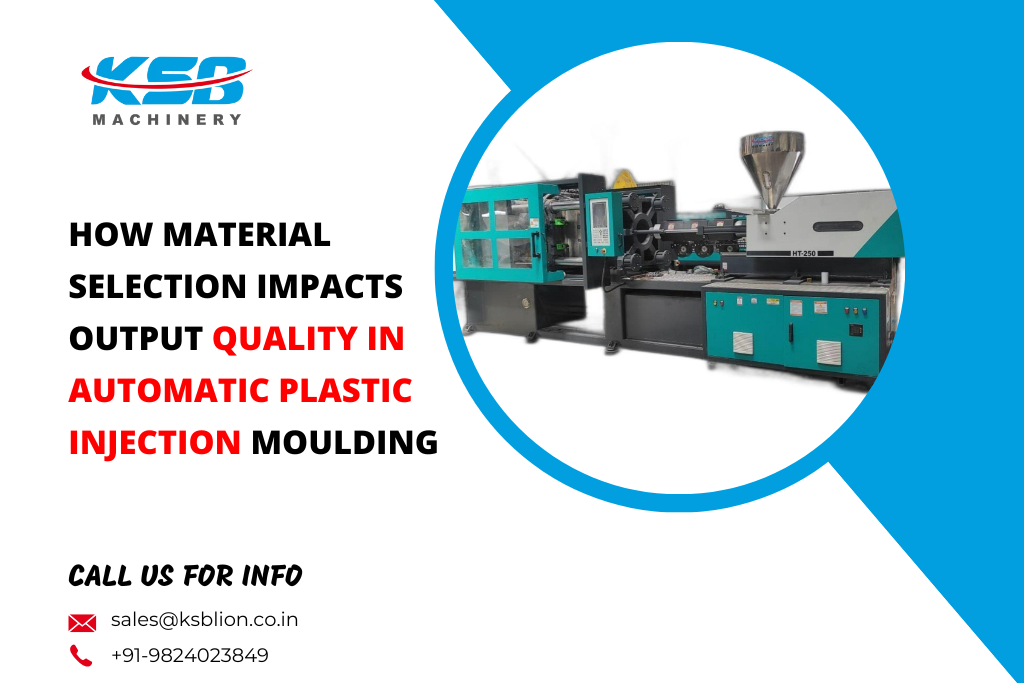
Automatic plastic injection moulding is one of the most efficient mass-manufacturing processes used across automotive, electronics, medical, and consumer goods industries. It delivers high precision, fast production cycles, and consistent quality. But one factor plays a crucial role in determining the final product’s performance – material selection.
Choosing the right polymer is just as important as choosing the best mould, machinery, or process settings. In this blog, we’ll understand how material selection in plastic injection moulding directly influences durability, finish, strength, and overall automatic injection moulding output quality.
Why Material Selection Matters?
Different plastic materials have different characteristics – from flexibility and heat resistance to transparency and chemical stability. Selecting the right material ensures that the final product:
- Meets physical and mechanical requirements
- Performs well in real-world environments
- Maintains smooth surface finish and shape accuracy
- Has minimal defects during and after moulding
Production cost and cycle efficiency are also influenced by the polymer used. The wrong material choice may lead to product failures, expensive rework, and increased scrap.
Common Considerations in Choosing Plastic Materials
Before selecting the material for an automatic injection moulding machine, manufacturers analyze:
✔ Mechanical strength (tensile, impact, stiffness)
✔ Heat and cold resistance
✔ Transparency or opacity needs
✔ Lightweight properties
✔ Chemical and UV resistance
✔ Dimensional stability
✔ Cost and availability
✔ Recyclability and sustainability options
Matching the material characteristics with product requirements ensures reliability and safety.
Best Plastics for Injection Moulding
Here are some widely used materials in plastic injection production and what they are best for:
| Material | Key Properties | Used In |
| PP (Polypropylene) | Lightweight, fatigue-resistant | Household goods, automotive parts |
| ABS (Acrylonitrile Butadiene Styrene) | High strength, good aesthetics | Appliances, casings, toys |
| PC (Polycarbonate) | Heat resistance, transparency | Electrical components, eyewear |
| HDPE/LDPE | Chemical resistance, flexibility | Bottles, containers, tubing |
| Nylon (PA) | Wear resistance | Gears, mechanical components |
| PVC | Chemical stability | Pipes, fittings |
| TPE / TPU | Elasticity | Soft-touch grips, footwear |
Knowing the best plastics for injection moulding helps manufacturers align product quality with end-use expectations.
How Material Impacts Output Quality?
Every polymer reacts differently during the injection moulding process. Here’s how material choice influences final product quality:
1. Mould Filling and Flow Behavior
Materials with high flowability fill mould cavities smoothly, reducing defects like air traps or incomplete filling. Incorrect choice can result in:
- Sink marks
- Warping
- Poor detail reproduction
2. Surface Finish and Aesthetics
Materials like ABS and PC give glossy finishes, while PP gives a matte texture. If surface quality is a priority — such as in consumer electronics — material selection becomes critical.
3. Dimensional Accuracy
Thermal expansion behavior varies between plastics. A wrong choice can lead to:
- Shrinkage variations
- Distortion after cooling
Stable materials maintain accuracy over large production volumes.
4. Strength and Durability
Industries like automotive require high-impact resistance and robust materials. Poor strength matching leads to product failure in end-use.
5. Processing Temperature and Cooling
The melting temperature of each material affects:
- Cycle time
- Cooling uniformity
- Energy consumption
Choosing efficient polymers improves automatic injection moulding output quality and reduces operational cost.
Material Selection & Machine Compatibility
Not every automatic injection moulding machine can process every type of polymer. Material choice must match:
- Barrel and screw design
- Heating capacity
- Clamping force
- Injection pressure
For example, engineering plastics like nylon and PC require higher processing temperatures and precise control systems. Selecting both the right machine and right material leads to optimal production results.
Trusted injection moulding machine manufacturers also guide customers about suitable polymers based on product application and machine specifications.
Sustainability & Cost Optimization
With industries shifting toward eco-friendly production:
- Recyclable polymers
- Bioplastics
- Regrind compatibility
…have become major decision factors. Sustainable material choices can help reduce waste without compromising performance.
Cost is another factor — raw material pricing varies widely. Balancing quality requirements with budget ensures an efficient and financially viable outcome.
Expert Guidance Makes a Difference
The right decision is never guesswork. Expert engineers usually evaluate:
- End-use environment
- Regulatory standards
- Surface finish needs
- Mechanical test reports
- Prototype evaluation
Early collaboration between design teams, material suppliers, and injection moulding machine manufacturers helps avoid errors and enhances product success.
Conclusion
Material selection is one of the most influential factors in the success of automatic plastic injection moulding. The right plastic ensures:
- Higher output quality
- Lower production cost
- Consistent performance
- Longer product life
Whether you are producing precision automotive components or stylish consumer products, paying attention to the material at the design stage is essential.
By choosing the best plastics for injection moulding and pairing them with a reliable automatic injection moulding machine, manufacturers can achieve superior performance, aesthetics, and customer satisfaction.