
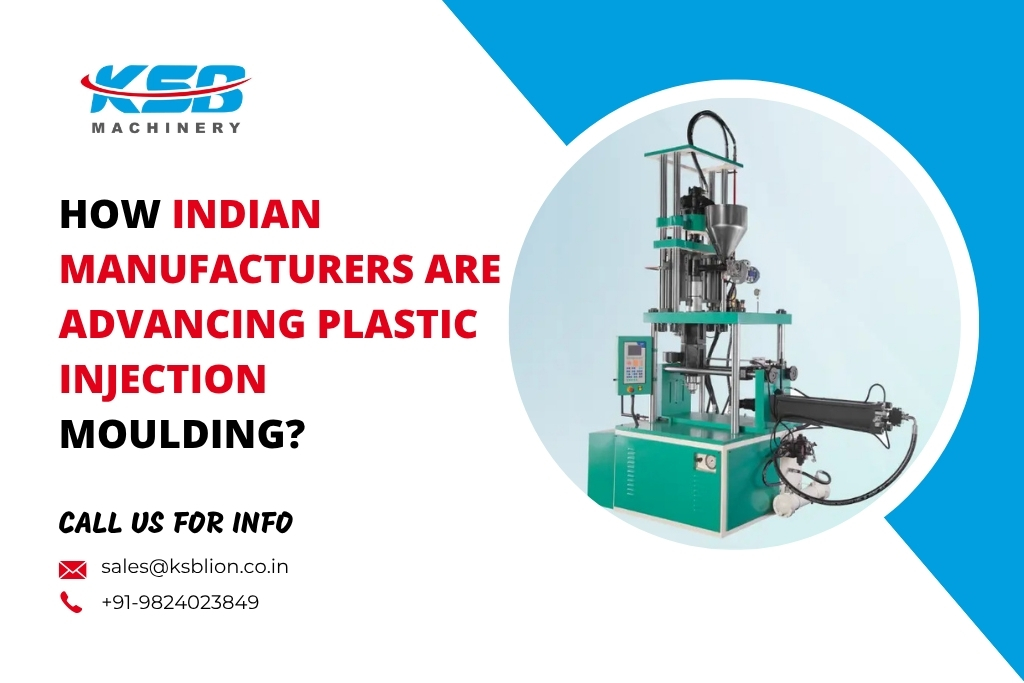
India’s plastic manufacturing industry is moving toward faster, more precise and technology-driven production. From automotive components and electrical products to packaging, consumer goods and industrial parts, injection moulding plays an important role in producing consistent plastic components at scale.
As production requirements become more demanding, businesses are looking for reliable equipment that can deliver accuracy, repeatability, energy efficiency and easier process control. This has increased the importance of Plastic Injection Moulding Machine Manufacturers in India, who are developing machines that combine proven moulding technology with modern automation and control systems.
KSBLION is one of the brands serving the plastic processing industry with injection moulding machine solutions designed for different manufacturing requirements.
The Role of Plastic Injection Moulding Machines in Modern Manufacturing
Plastic injection moulding involves heating plastic material until it reaches a suitable molten state and injecting it into a mould cavity under controlled conditions. After cooling, the mould opens and the finished component is removed.
Although the basic process is straightforward, achieving consistent results requires accurate control of several parameters, including:
- Injection pressure
- Injection speed
- Temperature
- Holding pressure
- Cooling time
- Clamping force
- Screw position
- Cycle time
Modern machines use advanced control systems to manage these parameters more accurately. This helps manufacturers maintain consistent production quality across repeated cycles.
For high-volume production, even a small improvement in cycle stability or reject reduction can have a significant effect on overall manufacturing efficiency.
Why Indian Injection Moulding Machine Manufacturers Are Evolving?
The Indian plastics industry is becoming increasingly competitive. Manufacturers need equipment that can support higher production demands while keeping quality and operating costs under control.
This is encouraging Injection Moulding Machine Manufacturers India to focus on technologies such as servo motor systems, digital controllers, automation, improved hydraulic systems and energy-efficient machine designs.
Another important development is application-specific machine configuration. A machine used for automotive components may require different specifications from one used for packaging products or electrical components.
Manufacturers therefore need to consider the product, material, mould, production volume and automation requirements before selecting equipment.
Advanced Control for Consistent Production
Process consistency is essential when manufacturing large quantities of identical plastic components.
Modern injection moulding machines allow operators to control and monitor important settings through digital control systems. Depending on the machine, these can include injection speed, pressure, temperature, screw position and cooling time.
Once suitable parameters are established, they can be maintained across production cycles, reducing unnecessary variations.
This is particularly important for products such as electrical housings, connectors, automotive components and precision industrial parts where dimensional consistency can affect assembly and performance.
Servo Motor Technology and Energy Efficiency
Energy consumption is an important consideration for plastic processing companies because injection moulding machines may operate for long production hours.
Servo motor technology has become increasingly popular in modern injection moulding equipment. Servo systems can provide controlled machine movement and deliver power according to operating requirements.
The actual energy performance depends on the machine design, production cycle, material, mould and operating conditions. However, efficient machine technology can support manufacturers looking to manage energy consumption while maintaining production performance.
For businesses comparing an Energy Efficient Injection Moulding Machine Manufacturer, energy use should be evaluated alongside productivity, machine capacity and overall operating requirements.
Automation in Plastic Injection Moulding
Automation is changing the way plastic components are manufactured. Depending on the application, injection moulding machines can be integrated with robots, conveyors, material handling systems and other auxiliary equipment.
Automation can support tasks such as:
- Removing finished components
- Handling parts between processes
- Counting production
- Material handling
- Quality monitoring
- Conveyor movement
- Packaging operations
For high-volume production, automated handling can reduce repetitive manual work and create a more organised workflow.
Manufacturers should select the appropriate automation level based on production volume, product design, available factory space and labour requirements.
Selecting the Correct Machine Capacity
Machine capacity should always match the actual production requirement. Selecting equipment only on the basis of price or maximum specifications can result in an unsuitable production setup.
Important factors include clamping force, injection capacity, mould dimensions, product weight and expected output.
Clamping Force
The clamping unit keeps the mould closed while molten plastic is injected. The required clamping force depends on factors such as projected component area, injection pressure, mould design and material.
Injection Capacity
The injection unit must be capable of delivering the required amount of material for the component and runner system. Material type and shot size should therefore be considered before selecting the machine.
Mould Compatibility
The machine should accommodate the mould’s dimensions, thickness, tie-bar spacing, opening stroke and ejection requirements.
Evaluating these specifications together helps manufacturers choose a machine that is appropriate for the intended application.
Machine Applications Across Different Industries
One of the major strengths of injection moulding is its flexibility. With suitable machine and mould configurations, the technology can support many industries.
Automotive Manufacturing
Injection moulding is widely used for plastic automotive components, housings, trims and functional parts.
Electrical and Electronics
Switches, connectors, enclosures and other electrical components often require accurate and repeatable moulding.
Packaging
Plastic containers, closures and related packaging components can be produced in high volumes using injection moulding.
Consumer Products
Household products, accessories and everyday plastic products can be manufactured using different injection moulding configurations.
Industrial Components
Plastic parts for machinery, equipment and industrial systems may require durable materials and controlled moulding processes.
Insert Moulding and Specialised Production
Some applications require plastic components to be moulded around metal or other inserts. Insert moulding combines multiple materials into a single finished component.
Vertical injection moulding machines can be suitable for certain insert moulding applications because their configuration can simplify insert placement before injection.
The correct machine depends on the insert type, mould design, product dimensions and required production process.
This demonstrates why working with experienced Plastic Injection Moulding Machine Manufacturers can be useful when selecting equipment for specialised applications.
Industry 4.0 Is Shaping the Next Generation of Moulding
The development of injection moulding is increasingly connected with Industry 4.0 manufacturing.
Smart sensors, machine monitoring and production data can provide manufacturers with greater visibility into machine performance.
Depending on the equipment and control system, production teams may be able to monitor:
- Cycle time
- Machine status
- Production quantity
- Temperature
- Pressure
- Alarms
- Energy consumption
This information can help identify process variations and support better production planning.
Data analytics can also help manufacturers identify recurring problems, monitor machine utilisation and plan maintenance more effectively.
AI, Machine Learning and Digital Manufacturing
Artificial intelligence and machine learning are emerging technologies within smart manufacturing. When sufficient production data is available, these technologies can help identify patterns associated with process variations, quality issues or machine performance.
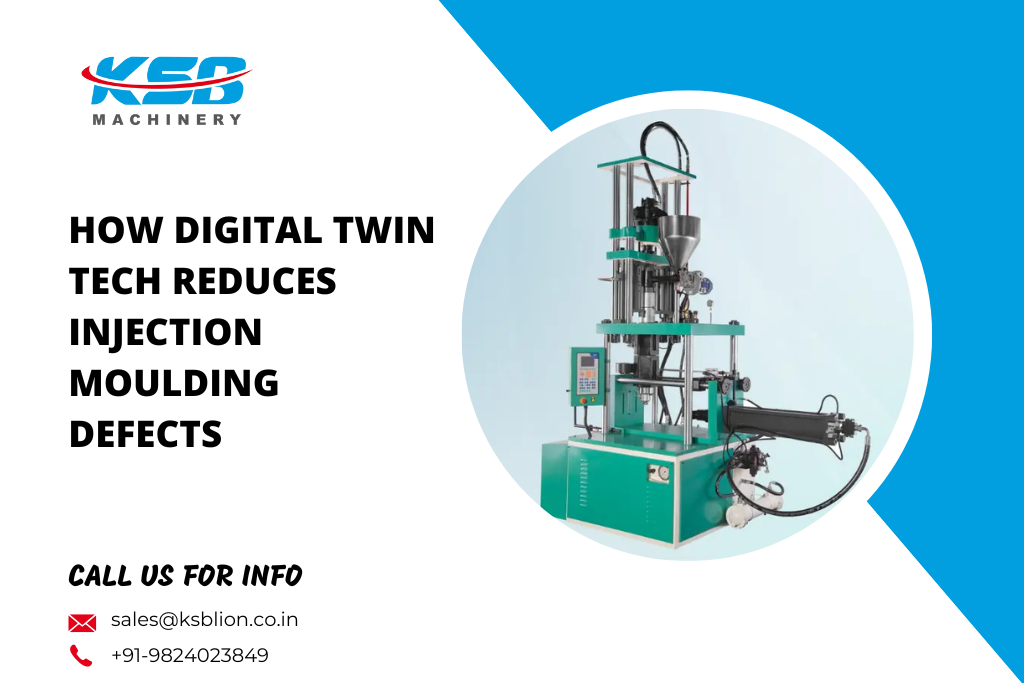
Digital twin technology is another developing area. A digital representation of a machine or production process can potentially be used for process analysis, planning and performance evaluation.
These technologies are not necessary for every factory today, but they demonstrate the direction in which modern plastic manufacturing is moving.
Sustainability and Waste Reduction
Sustainability is becoming an important consideration for plastic processors. Efficient production is not only about increasing output; it is also about reducing avoidable material and energy losses.
Production waste may result from incorrect machine settings, unstable processing, mould problems, material handling issues or rejected components.
Accurate process control can help reduce unnecessary rejects, while efficient machine operation can support better energy management.
However, sustainability depends on the complete manufacturing process. Machine selection, mould design, material quality, operator practices and process optimisation all contribute to overall efficiency.
Why Manufacturer Support Matters?
An injection moulding machine is a long-term production investment. Buyers should therefore evaluate more than machine specifications.
Technical support can be important during installation, commissioning, process setup, troubleshooting and maintenance.
Before purchasing, manufacturers should consider:
- Machine capacity and specifications
- Product and material requirements
- Mould compatibility
- Automation requirements
- Energy consumption
- Maintenance needs
- Spare-part availability
- Technical service
- Future production expansion
KSBLION provides injection moulding machine solutions for different plastic processing requirements, helping manufacturers evaluate equipment according to their production needs.
How to Choose the Right Plastic Injection Moulding Machine Manufacturer in India?
Choosing the right manufacturer requires a balance between technical specifications, application requirements and long-term support.
Start by defining the product and material to be processed. Then determine the required mould size, clamping force, injection capacity and production volume.
After that, evaluate machine control, automation options, energy efficiency and maintenance requirements.
Finally, consider the manufacturer’s technical expertise and ability to support the machine after installation.
A suitable machine is not necessarily the one with the highest capacity. It is the one that provides the right combination of performance, control, reliability and flexibility for the intended application.
Frequently Asked Questions
What does a plastic injection moulding machine manufacturer do?
A manufacturer designs and produces injection moulding machines used to manufacture plastic components. Depending on the company, it may also provide machine configuration, installation, technical support and service.
Which industries use injection moulding machines?
Automotive, electrical, electronics, packaging, consumer goods and industrial manufacturing are among the major industries that use injection moulding technology.
Why is servo technology used in injection moulding machines?
Servo systems can provide controlled machine movement and may improve energy management and process control, depending on the machine and application.
How important is clamping force?
Clamping force is essential because it keeps the mould closed during injection. The required capacity depends on the mould, component, material and processing conditions.
Can injection moulding machines be automated?
Yes. Suitable machines can be integrated with robots, conveyors, material handling equipment and other automation systems depending on the production process.
What should I check before buying an injection moulding machine?
Check the machine’s clamping force, injection capacity, mould compatibility, material requirements, production volume, automation options, energy consumption, maintenance requirements and technical support.
Conclusion
The Indian plastic manufacturing sector is moving toward smarter and more efficient production. Plastic Injection Moulding Machine Manufacturers in India are responding with improved control systems, servo technology, automation, energy-conscious designs and Industry 4.0 capabilities. For manufacturers, selecting the right machine requires a clear understanding of the product, mould, material, production volume and future requirements.
By evaluating machine performance together with automation, process control, energy efficiency and manufacturer support, businesses can build a more reliable and adaptable plastic production system. KSBLION can be considered by manufacturers looking for injection moulding machine solutions suited to different plastic processing applications.
Tags:Plastic Injection Moulding Machine manufacturers in India