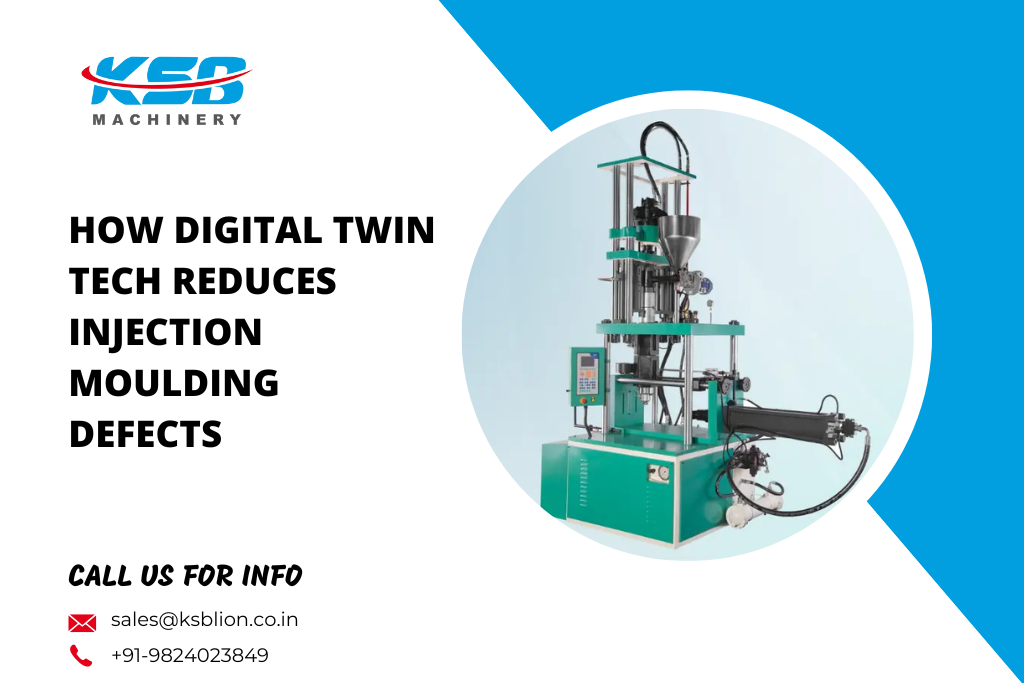
Injection moulding remains one of the most crucial manufacturing processes in India, powering sectors like automotive, electronics, medical devices, appliances, and consumer goods. However, maintaining consistent quality while increasing production speed is a challenge faced by manufacturers of all scales. This is where digital twin technology in manufacturing is revolutionizing the industry—especially in helping factories reduce injection moulding defects and improve efficiency.
As competition rises among plastic injection moulding machine manufacturers in India, adopting digital tools is becoming necessary for achieving global-quality output and reducing operational costs.
What Is Digital Twin Technology?
A digital twin is a virtual replica of a physical machine, process, or system. In the injection moulding industry, it means creating a real-time digital model of:
- The injection moulding machine
- The mould and cavity behavior
- Material flow characteristics
- Production environment
This digital model continuously receives data from sensors installed on the physical machine. By analyzing this data, the digital twin can predict machine behavior, detect variations, simulate production, and recommend corrective actions.
The use of digital twin in injection moulding is growing rapidly in India as companies embrace Industry 4.0 practices to boost productivity.
How Digital Twin Tech Helps Reduce Injection Moulding Defects?
Injection moulding defects such as warpage, sink marks, flash, burn marks, and short shots can lead to production losses, rework, and customer dissatisfaction. Digital twin technology helps address these issues by offering data-driven insights and predictive modeling.
Here’s how it significantly reduces defects:
1. Real-Time Monitoring and Adjustment
Digital twins constantly track machine parameters like:
- Melt temperature
- Injection pressure
- Cooling time
- Mold temperature
If the system detects abnormal patterns, it alerts the operator or automatically adjusts settings—preventing defects before they occur.
2. Predictive Quality Control
Instead of waiting for defects to show up in finished products, manufacturers can use digital twins to simulate production cycles.
This helps identify:
- Potential failure points
- Material inconsistencies
- Process deviations
Predictive modeling helps factories reduce injection moulding defects well before they impact production.
3. Improved Mold Design and Optimization
Digital twins simulate mold performance under different conditions. This helps manufacturers:
- Predict warpage and shrinkage
- Test cooling channel designs
- Optimize gate and runner positions
- Analyze stress distribution
Such insights help improve mould life and ensure consistent part quality.
4. Data-Driven Maintenance
Instead of breakdown-based maintenance, digital twins enable:
- Predictive maintenance
- Condition-based servicing
- Early detection of machine wear
This reduces downtime and ensures the equipment is always running at optimal levels—an important factor in maintaining product quality.
5. Material Flow Simulation
Different polymer materials behave differently during injection. Digital twins simulate:
- Melt flow index
- Viscosity
- Cooling behavior
- Thermal expansion
This data helps operators choose the right materials and parameters to achieve defect-free moulding results.
Why Indian Manufacturers Need Digital Twin Technology?
The Indian manufacturing sector is becoming globally competitive, and export-driven industries demand precision, consistency, and speed. The adoption of digital twins offers benefits such as:
- Lower rejection rates
- Faster production cycles
- Reduced downtime
- Higher profitability
- Better product consistency
- Improved machine performance
With the growing number of injection moulding machine manufacturers upgrading to smart and automated machines, digital twin integration is becoming an industry standard rather than a luxury.
Role of Plastic Injection Moulding Machine Manufacturers
Indian plastic injection moulding machine manufacturers play a key role in bringing digital twin solutions to the market. Many leading companies now offer:
- IoT-enabled machines
- Sensor-integrated components
- Cloud-based monitoring dashboards
- Machine learning–driven performance analytics
- Real-time quality control systems
By offering digital twin–compatible machines, manufacturers empower Indian factories to transform into smart manufacturing units.
Future of Digital Twin in Injection Moulding
The coming years will see wider adoption of digital twin tools across Indian factories. Expect advancements like:
- AI-driven automatic parameter optimization
- Virtual mould testing before physical prototyping
- End-to-end digital production lines
- Smart supply-chain integration
- Zero-defect manufacturing models
As Industry 4.0 continues to grow, digital twin technology will become essential for quality control, process automation, and cost reduction.
Conclusion
Digital twin technology is reshaping the injection moulding sector by enabling manufacturers to predict defects, optimize processes, enhance mould design, and maintain equipment proactively. For India’s growing industrial landscape, adopting digital twin in injection moulding is a strategic move toward zero-defect manufacturing.
With major plastic injection moulding machine manufacturers and suppliers now offering smart, connected machines, factories can seamlessly integrate digital twin tools and significantly reduce injection moulding defects. As demand for efficiency rises, digital twins will continue to play a crucial role in modernizing Indian manufacturing.