
In plastic manufacturing, achieving consistent part quality is not just about material selection or mold design. Two critical process parameters-clamp force and cycle time-play a decisive role in determining final product quality, efficiency, and cost. Understanding how these factors interact helps manufacturers reduce defects, improve productivity, and extend machine and mold life.
This article explains how clamp force and cycle time impact moulding quality, common problems caused by incorrect settings, and best practices for optimization.
Understanding Clamp Force in Injection Moulding
Clamp force in injection moulding refers to the force applied by the machine to keep the mold halves closed during injection and packing. Its primary function is to resist the cavity pressure generated when molten plastic is injected into the mold.
Why Clamp Force Matters?
If clamp force is set incorrectly, it can directly lead to moulding defects:
- Insufficient clamp force
- Causes mold opening during injection
- Results in flash, short shots, and dimensional inaccuracy
- Excessive clamp force
- Accelerates mold wear
- Increases machine stress and energy consumption
- Can deform mold components over time
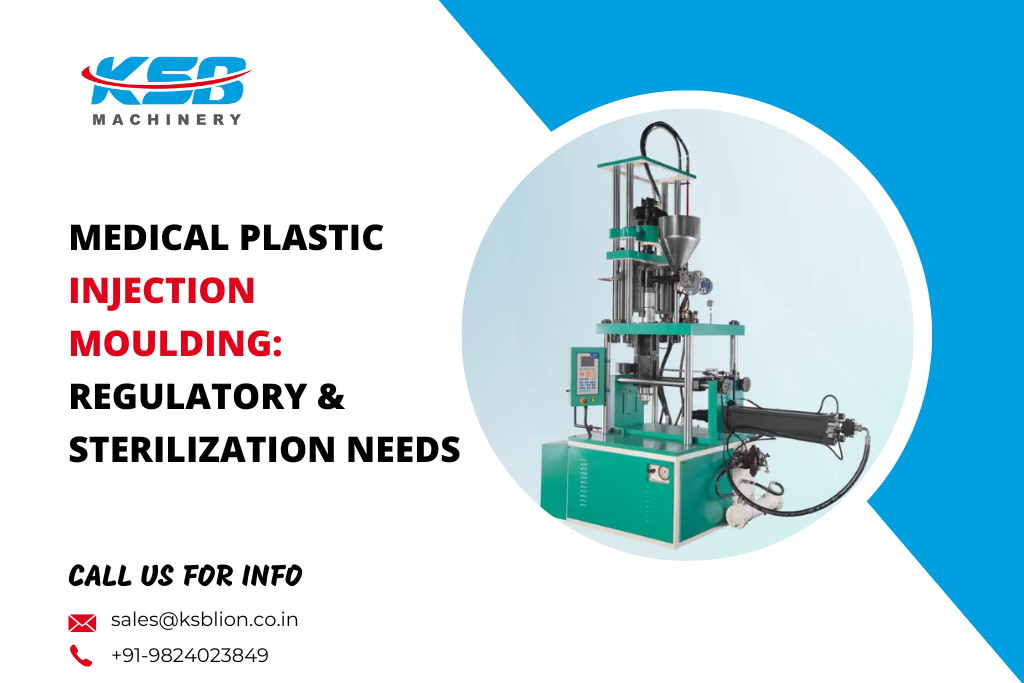
Modern Plastic Injection moulding Machine designs allow precise clamp force adjustment, helping manufacturers match force levels to part size, material viscosity, and cavity pressure.
Role of Cycle Time in Injection Moulding Quality
Cycle time is the total time required to complete one molding cycle, including injection, packing, cooling, mold opening, and ejection. Injection moulding cycle time optimization is essential for balancing productivity with part quality.
Impact of Improper Cycle Time
- Short cycle time
- Inadequate cooling
- Warpage, sink marks, and internal stress
- Long cycle time
- Lower production efficiency
- Higher energy and operational costs
Optimized cycle time ensures that parts solidify uniformly, reducing internal defects while maintaining consistent output rates.
How Clamp Force and Cycle Time Work Together?
Clamp force and cycle time are closely interconnected. Increasing injection pressure to reduce cycle time often requires higher clamp force. Conversely, insufficient clamp force may force operators to increase cycle time to avoid defects.
For example:
- High injection speed + low clamp force = flash and mold separation
- Low injection speed + excessive cooling time = long cycles and reduced profitability
Balancing both parameters is essential to maintain moulding quality while maximizing machine efficiency.
Common Moulding Quality Defects Causes
Understanding moulding quality defects causes helps manufacturers identify whether clamp force or cycle time is the root problem.
| Defect | Likely Cause |
| Flash | Low clamp force, excessive injection pressure |
| Short shot | Low injection pressure, short fill time |
| Sink marks | Insufficient packing or cooling |
| Warpage | Uneven cooling, rushed cycle time |
| Burn marks | Excessive injection speed or trapped air |
Many of these issues can be resolved by fine-tuning clamp force and optimizing cycle time rather than changing materials or molds.
Best Practices for Optimization
1. Match Clamp Force to Projected Area
Calculate clamp force based on the projected area of the part and cavity pressure rather than using maximum machine capacity.
2. Use Scientific Moulding Principles
Monitor cavity pressure and cooling time to determine the shortest stable cycle without compromising part quality.
3. Leverage Advanced Machine Controls
A modern Plastic Injection moulding Machine with servo-driven clamps, real-time monitoring, and closed-loop control ensures consistent clamp force and repeatable cycles.
4. Work with the Right Injection Moulding Machine Manufacturer
A reliable Injection moulding Machine Manufacturer provides:
- Application-specific machine sizing
- Energy-efficient clamp systems
- Process optimization support
- Long-term service and training
Choosing the right machine partner can significantly reduce trial-and-error during production.
Conclusion
Clamp force and cycle time are two of the most influential parameters in injection moulding. Incorrect settings can lead to quality defects, higher scrap rates, and increased operational costs. By understanding clamp force in injection moulding, focusing on injection moulding cycle time optimization, and addressing common moulding quality defects causes, manufacturers can achieve consistent, high-quality output.
Investing in a high-performance Plastic Injection moulding Machine and partnering with a trusted Injection moulding Machine Manufacturer ensures better control, efficiency, and long-term production success.