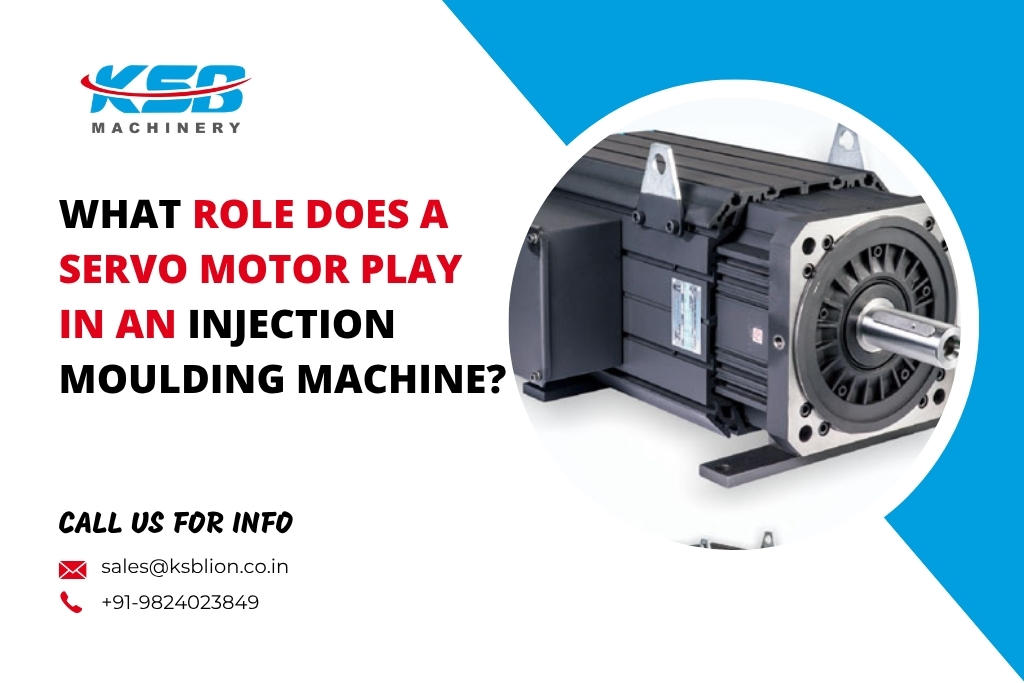
Modern plastic manufacturing depends on precise control over speed, pressure, movement and timing. As production requirements become more demanding, manufacturers are increasingly looking at technologies that can provide better control while using energy efficiently. This is where the servo motor injection moulding machine becomes relevant.
A servo motor is not simply a replacement for a conventional motor. It works as part of a controlled drive system that can regulate machine movements according to the production cycle. Depending on the machine design, servo-driven systems can control hydraulic pumps or other machine functions with greater responsiveness.
For manufacturers producing components where repeatability, cycle control and operating efficiency matter, understanding the role of the servo motor can make machine selection easier. KSBLION focuses on injection moulding machine solutions where machine configuration and application requirements are important considerations.
Why Servo Motors Matter in Injection Moulding Machines?
An injection moulding machine performs several coordinated operations during every production cycle. Plastic material is plasticised, the mould is closed, the material is injected into the cavity, pressure is maintained, the part is cooled and the mould is opened for ejection.
Each movement requires controlled power.
A servo motor provides this power through a drive system that can adjust motor operation according to the required machine movement. Instead of running continuously at a fixed operating condition, the system can respond to changing demands during different stages of the cycle.
This operating principle can help manufacturers manage machine movements more precisely.
The exact role of the servo motor depends on the architecture of the particular injection moulding machine. In servo-hydraulic machines, for example, the servo motor drives a hydraulic pump, while valves and hydraulic components translate that power into machine movement.
What Functions Can a Servo System Support?
The servo system can be involved in several important machine operations. The exact configuration varies between machine models, but common functions can include:
| Machine Function | Role of Servo Control | Production Relevance |
| Injection | Controls the drive supplying the injection movement | Supports controlled injection speed and pressure |
| Screw Rotation | Provides controlled drive for plasticising | Helps maintain repeatable material preparation |
| Hydraulic Pumping | Adjusts pump operation according to demand | Can reduce unnecessary running during idle periods |
| Pressure Holding | Supports controlled pressure-related operation | Helps maintain process consistency |
| Machine Movement | Responds to programmed operating requirements | Supports coordinated cycle operation |
Understanding these functions is important because servo technology affects more than just energy consumption. Its main value comes from how accurately the machine can respond to changing production requirements.
Servo Control During Screw Rotation and Plasticising
Before injection can take place, plastic pellets or granules must be heated and prepared for the next shot. The screw rotates inside the barrel and moves the material while generating the required plasticising action.
Servo-driven control can provide controlled screw movement according to the machine’s programmed requirements.
This is particularly relevant when production requires repeatable shot preparation. Consistent screw rotation can help maintain a more stable plasticising process when other important parameters, such as material temperature and back pressure, are also properly managed.
The servo motor therefore contributes to the preparation stage as well as the injection stage.
Why Speed Control Matters?
Different stages of an injection moulding cycle do not necessarily require the same motor output. For example, rapid movement may be required during one stage, while another stage may require controlled movement at a lower speed.
Servo technology allows the drive system to respond to these changing requirements.
For manufacturers, this can be useful when producing components that require controlled filling or when different stages of the machine cycle need clearly defined operating parameters.
The objective is not simply to make the machine move faster. Instead, the objective is to provide appropriate speed and power when they are needed.
The Connection Between Servo Technology and Pressure Control
Pressure is another important factor in injection moulding. During the injection and holding stages, the machine needs to generate and maintain the required force for the specific process.
Servo control can contribute to this through accurate regulation of the drive system. In a servo-hydraulic configuration, the servo motor controls pump output, while the hydraulic system delivers the required movement and force.
This creates a connection between motor control and the machine’s pressure requirements.
However, pressure control should not be considered independently. Material characteristics, mould design, injection speed, temperature and machine settings all interact during the moulding process.
Servo Motor Technology and Cycle Repeatability
Plastic manufacturers often need to produce large numbers of components with consistent dimensions and appearance. For this reason, repeatability is an important consideration when evaluating an injection moulding machine.
A servo system can provide controlled and programmable movement across different stages of the production cycle. When combined with appropriate sensors, controllers, moulds, material preparation and process settings, this can support repeatable machine operation.
For example, the machine can be programmed for specific injection speeds, pressure-related settings and screw movement requirements. The control system then coordinates these parameters throughout the cycle.
This does not mean a servo motor alone guarantees product consistency. Consistency depends on the complete injection moulding process.
Energy Management During Different Cycle Stages
Energy consumption in an injection moulding machine is influenced by several factors, including machine size, cycle time, product requirements, hydraulic configuration and operating conditions.
Servo technology can contribute to energy management by adjusting motor output according to demand.
For example, when the machine requires high hydraulic output, the servo system can increase motor operation. When demand decreases, the system can reduce the motor’s operating level.
This demand-based approach can avoid unnecessary motor operation in suitable conditions.
It is important, however, to evaluate energy performance using the complete machine and actual production cycle rather than assuming that every servo machine will provide the same energy consumption.
Servo Systems and Faster Machine Response
Response time is another factor that matters in modern injection moulding.
During production, the machine may need to change between different speed and pressure requirements. A servo drive can respond to control commands and adjust motor operation accordingly.
This can help the machine follow programmed operating conditions more closely.
For manufacturers producing components with demanding process requirements, controlled response can be useful when fine adjustments are needed between different stages of the cycle.
The controller, sensors, drive, hydraulic system and mechanical components all work together to achieve this response. Therefore, the performance of a servo motor should always be considered as part of the complete machine system.
Servo Motor Injection Moulding Machine vs Conventional Drive Systems
The difference between servo-driven and conventional systems is primarily related to how the machine’s power demand is managed.
| Parameter | Servo Motor System | Conventional Fixed-Speed Approach |
| Motor operation | Adjusts according to system demand | Often operates at a more constant speed |
| Speed control | Programmable and variable | More dependent on the overall drive arrangement |
| Energy management | Can reduce output during lower-demand periods | May continue consuming power during certain idle or low-demand stages |
| Process control | Supports coordinated speed and pressure control | Depends on machine architecture and hydraulic control |
| Cycle management | Suitable for programmed operating profiles | Can require different control arrangements |
| Application focus | Precision, control and demand-based operation | Established production applications |
The actual difference varies according to machine design. Therefore, this comparison should be used as a general understanding rather than as a guarantee of performance for every machine.
Choosing a Servo Motor Injection Moulding Machine for Your Application
The role of a servo motor extends beyond simply driving the machine. It can influence how power is delivered, how movement is controlled and how the machine responds to changing production demands.For manufacturers, the key is to connect these capabilities with real production requirements.
Before making a purchase, it is useful to compare machine specifications, understand the drive architecture and discuss the intended application with the manufacturer. This can help identify whether the selected configuration is appropriate for the material, mould, product and production cycle.
KSBLION can be considered when evaluating servo motor injection moulding machine solutions for plastic manufacturing requirements. A detailed discussion around the intended application can help buyers understand the available machine configuration and relevant specifications.
Frequently Asked Questions
What is the main role of a servo motor in an injection moulding machine?
A servo motor provides controlled power for machine operations. Depending on the machine configuration, it can drive a hydraulic pump or support other controlled movements involved in injection moulding.
Does a servo motor reduce energy consumption?
A servo-driven system can reduce energy use by adjusting motor operation according to demand. The actual energy consumption depends on machine design, cycle conditions, production requirements and operating hours.
Can a servo motor improve injection control?
Servo technology can support controlled speed and pressure-related operation. However, final injection performance also depends on the controller, hydraulic system, screw, mould, material and process settings.
Is a servo motor suitable for all injection moulding applications?
Servo technology can be used across many plastic manufacturing applications, but the appropriate machine depends on product specifications, mould requirements, material, production volume and required process conditions.
What should I check before buying a servo injection moulding machine?
Consider clamping force, injection capacity, screw configuration, control system, mould compatibility, cycle requirements, energy performance, machine construction and technical support.
Why is the complete machine configuration important?
The servo motor works together with other machine components. Its performance cannot be evaluated separately from the injection unit, hydraulic or drive system, controller, clamping unit and mould.
Final Thoughts
A servo motor plays an important role in modern injection moulding by providing controlled power and responding to changing machine demands. In suitable machine configurations, this can support controlled injection, screw rotation, hydraulic operation, energy management and repeatable production cycles.
However, servo technology should not be viewed as a standalone solution. Machine design, mould quality, material preparation, process parameters, control systems and operator practices all contribute to the final production result.
For this reason, choosing a Servo Motor Injection Moulding Machine should involve evaluating the entire production system and matching the machine to the actual application. With the right configuration, servo-driven technology can become an important part of a controlled and efficient plastic manufacturing process.