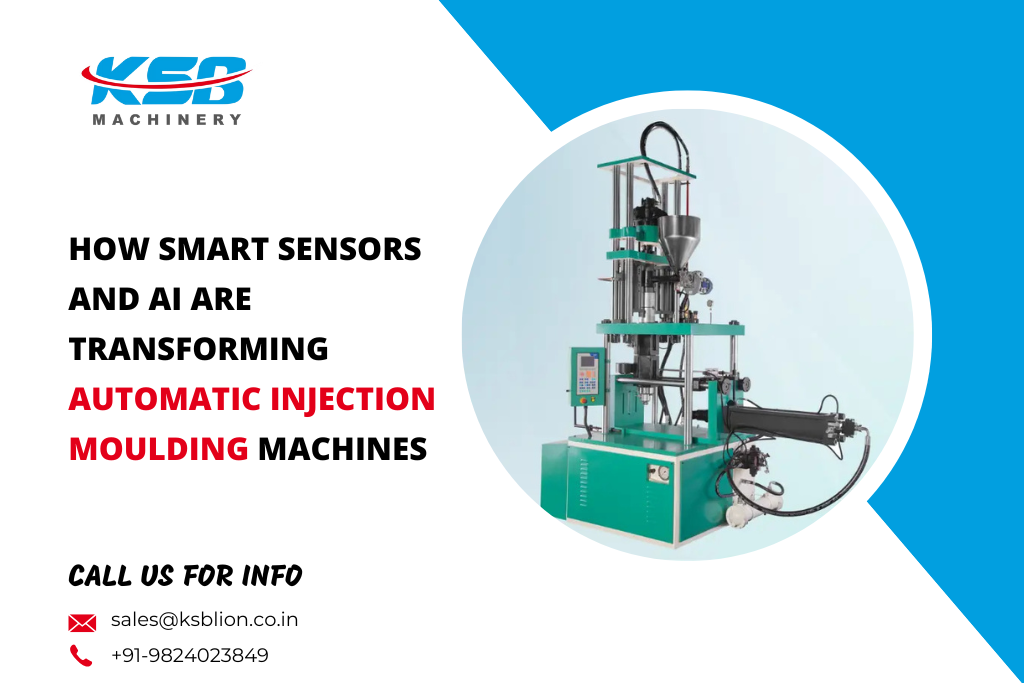
Manufacturing is undergoing a major digital transformation, and automatic injection moulding machines are at the forefront of this change. With the integration of smart sensors and artificial intelligence (AI), injection moulding has evolved from a mechanical process into an intelligent, self-optimizing production system. This shift aligns with Industry 4.0 injection moulding automation, enabling manufacturers to improve efficiency, quality, and profitability.
Evolution of Automatic Injection Moulding Machines
Traditionally, an Automatic Injection Moulding Machine relied on preset parameters and manual supervision. Operators adjusted temperature, pressure, and cycle times based on experience. While effective, this approach often led to inconsistencies, material waste, and machine downtime.
Today, smart technologies allow machines to think, learn, and adapt in real time—reducing human error and boosting precision.
Role of Smart Sensors in Injection Moulding Machines
Smart sensors in injection moulding machines continuously monitor critical process variables such as:
- Temperature of the barrel and mould
- Injection pressure and clamping force
- Material flow and viscosity
- Cycle time and cooling rates
These sensors collect real-time data and feed it into advanced control systems. Unlike conventional sensors, smart sensors can detect minute deviations, predict potential defects, and trigger automatic adjustments before issues occur.
Key Benefits of Smart Sensors
- Consistent product quality
- Reduced scrap and rework
- Improved process transparency
- Enhanced machine safety
This sensor-driven insight forms the foundation for AI-based optimization.
AI in Automatic Injection Moulding Machines
The integration of AI in automatic injection moulding machines has revolutionized process control. AI algorithms analyze vast amounts of data collected by sensors to identify patterns, predict outcomes, and optimize parameters autonomously.
How AI Transforms Injection Moulding?
- Self-Optimizing Processes: AI adjusts machine settings in real time to maintain optimal conditions.
- Predictive Maintenance: Machine learning models detect early signs of wear, preventing unexpected breakdowns.
- Defect Prediction: AI identifies potential defects such as warping, sink marks, or short shots before they occur.
- Energy Optimization: Intelligent systems reduce energy consumption without compromising output.
By reducing dependency on manual intervention, AI-driven systems ensure repeatability and scalability across production lines.
Industry 4.0 Injection Moulding Automation
Industry 4.0 injection moulding automation represents the convergence of digital technologies, data analytics, and smart manufacturing. In this ecosystem:
- Machines communicate with each other (M2M communication)
- Production data is stored and analyzed in the cloud
- Digital dashboards provide real-time performance insights
- ERP and MES systems integrate seamlessly with moulding machines
This interconnected environment allows manufacturers to make data-driven decisions, improve traceability, and respond quickly to market demands.
Benefits for Manufacturers
The adoption of smart sensors and AI delivers measurable advantages:
- Higher Productivity
Faster cycle times and reduced downtime lead to increased output. - Superior Quality Control
Continuous monitoring ensures uniform part quality across batches. - Lower Operational Costs
Reduced material waste, energy savings, and fewer breakdowns lower overall costs. - Scalability and Flexibility
Intelligent machines adapt easily to new moulds, materials, and designs.
These benefits make smart injection moulding essential for competitive manufacturing.
Impact on Plastic Injection Moulding Machine Manufacturers
Leading Plastic Injection Moulding Machine Manufacturers are now integrating AI-driven controls, advanced sensor systems, and IoT connectivity into their machines. This shift is redefining industry standards and customer expectations.
Manufacturers offering smart, automated solutions gain:
- Stronger market positioning
- Higher customer trust
- Long-term service and upgrade opportunities
As customers increasingly demand intelligent and energy-efficient solutions, innovation in AI-enabled machines becomes a key differentiator.
Future of Intelligent Injection Moulding
The future of Automatic Injection Moulding Machines lies in fully autonomous systems capable of learning and improving over time. Advancements such as digital twins, adaptive robotics, and AI-driven quality inspection will further enhance efficiency and precision.
Manufacturers who adopt smart technologies today will be better positioned to meet evolving regulatory, sustainability, and performance demands.
Final Thoughts
The integration of smart sensors in injection moulding machines and AI in automatic injection moulding machines marks a major leap toward intelligent manufacturing. As part of Industry 4.0 injection moulding automation, these technologies are transforming how products are designed, produced, and delivered.
For businesses working with forward-thinking Plastic Injection Moulding Machine Manufacturers, embracing smart automation is no longer optional—it is essential for staying competitive in a rapidly evolving global market.