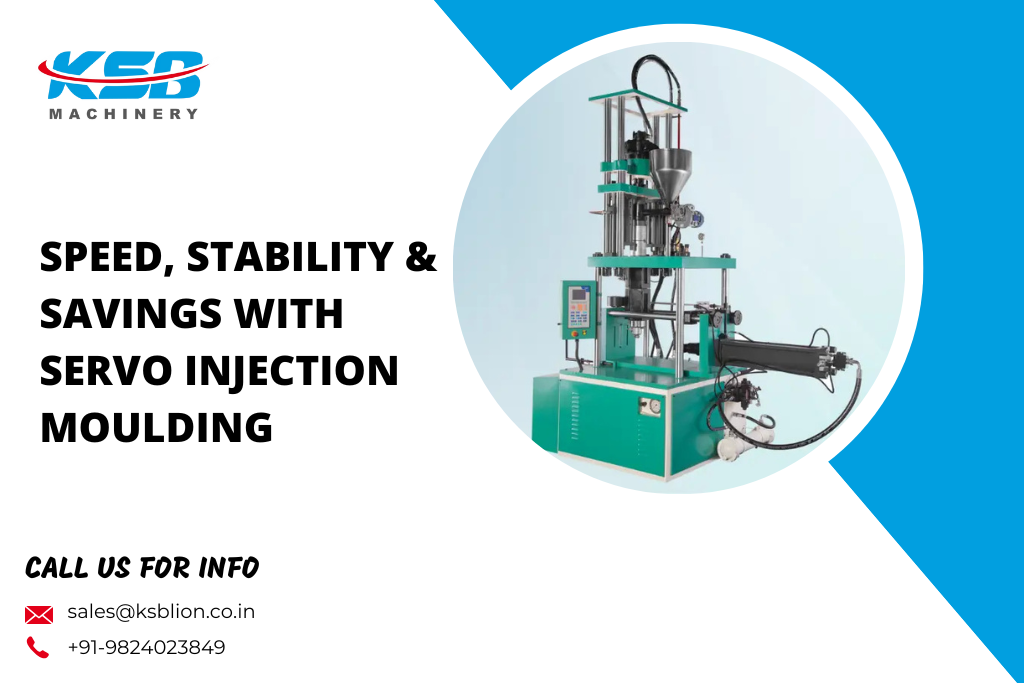
In the fast-paced world of plastic production, manufacturers are constantly seeking ways to enhance precision, reduce energy costs, and improve overall efficiency. Traditional hydraulic machines, while reliable, are no longer enough to meet today’s performance and sustainability standards. That’s where the servo motor injection moulding machine has emerged as a true game-changer — combining speed, stability, and energy savings in one smart solution.
Let’s explore why this technology is reshaping the future of plastic manufacturing and how it’s helping modern injection moulding machine manufacturers stay ahead of the curve.
What Is a Servo Motor Injection Moulding Machine?
A servo motor injection moulding machine uses an intelligent servo-driven system to control hydraulic pump movements precisely based on demand. Unlike traditional constant-speed motors, servo motors operate only when needed — adjusting their speed and torque dynamically during each cycle.
This adaptive technology results in faster response times, higher repeatability, and remarkable energy efficiency. For manufacturers, that means lower production costs, reduced maintenance, and a smaller environmental footprint.
Advantages of Servo Injection Moulding Machine
The shift from conventional hydraulic systems to servo-driven technology offers several distinct advantages. Here are the top benefits every plastic manufacturer should know:
Energy Efficiency and Cost Savings
One of the biggest advantages of servo injection moulding machine is its ability to reduce power consumption by up to 60–80% compared to traditional systems.
Because the servo motor only draws power when required (unlike a hydraulic pump that runs continuously), it minimizes idle energy losses — making it an energy saving injection moulding machine ideal for high-volume production lines.
Unmatched Precision and Repeatability
Servo motors offer exceptional control over pressure and injection speed. This ensures consistent part quality, minimal flash, and accurate shot weight in every cycle — essential for applications in automotive, electronics, and medical industries.
Faster Cycle Times
With rapid acceleration and deceleration, servo-driven systems reduce overall cycle time significantly. The faster response during injection, holding, and cooling stages improves throughput and overall plant productivity.
Lower Noise and Heat Generation
Traditional hydraulic machines often generate excess heat and noise, increasing cooling requirements and operator fatigue. In contrast, servo systems run quietly and maintain stable oil temperatures, extending machine life and reducing downtime.
Low Maintenance and Longer Lifespan
Since servo motors experience less wear and operate efficiently at variable speeds, the overall mechanical stress on components is reduced. This means fewer breakdowns, lower maintenance costs, and improved reliability for long-term use.
How Energy Saving Injection Moulding Machines Support Sustainability?
In today’s sustainability-driven market, reducing energy waste is no longer optional — it’s a necessity. For plastic injection moulding machine manufacturers, the push toward eco-efficient production aligns perfectly with servo technology.
Here’s how energy saving injection moulding machines contribute to greener manufacturing:
- Reduced Carbon Footprint: Lower power usage means fewer CO₂ emissions per production cycle.
- Less Cooling Water Needed: With less heat generation, cooling system requirements drop substantially.
- Optimized Power Management: Servo systems consume only as much electricity as required per shot, minimizing waste.
- Compliance with Green Manufacturing Standards: Many global manufacturers now prefer servo-based systems to meet ISO and energy efficiency certifications.
By adopting servo-driven solutions, injection moulding machine manufacturers are not only improving performance but also contributing to a more sustainable future.
Why Plastic Injection Moulding Machine Manufacturers Are Moving Toward Servo Technology?
The global manufacturing industry is undergoing a digital transformation — and the servo motor injection moulding machine is at its center. Let’s break down why the shift is happening across industries:
- Customer Demand for Quality: End-users now expect flawless plastic parts with tight tolerances, achievable only through servo precision.
- Rising Energy Costs: As electricity prices climb, energy-efficient machinery becomes a strategic investment.
- Smart Automation: Servo systems integrate seamlessly with robotics, sensors, and IoT technologies for Industry 4.0-ready production lines.
- Data-Driven Manufacturing: Real-time feedback and process control allow for predictive maintenance and performance optimization.
In short, servo technology empowers manufacturers with speed, stability, and savings — the three pillars of modern plastic production.
Comparing Servo vs. Traditional Hydraulic Injection Moulding Machines
| Feature | Hydraulic Machine | Servo Motor Machine |
| Energy Efficiency | Constant energy use | Power only when needed |
| Noise Level | High | Very Low |
| Cycle Time | Moderate | Faster response |
| Precision | Limited control | High repeatability |
| Maintenance | Frequent | Minimal |
| Initial Cost | Lower | Slightly higher, but pays off long-term |
While hydraulic systems still have their place in heavy-duty or low-cost operations, the long-term benefits of servo-driven machines make them the preferred choice for future-focused factories.
Future of Plastic Manufacturing: Smart, Efficient, and Sustainable
As automation and precision continue to drive manufacturing evolution, servo-driven systems will play a central role in shaping next-generation production lines. Future plastic injection moulding machine manufacturers are likely to integrate AI-driven process optimization, self-calibration, and real-time energy tracking — all built around the servo foundation.
Investing in an energy saving injection moulding machine today is not just about upgrading technology; it’s about future-proofing your manufacturing capabilities.
Final Thoughts
The servo motor injection moulding machine represents more than just a technological upgrade — it’s a strategic leap toward smarter, cleaner, and more profitable plastic manufacturing.
With benefits like reduced power consumption, improved precision, faster cycles, and lower maintenance, servo-driven systems offer a clear competitive edge for injection moulding machine manufacturers and end users alike.
If your goal is to produce high-quality parts efficiently while cutting costs and supporting sustainability, the future is clear: go servo.